
Best Synthetic Core Violin Strings for Clear Tone and Longevity
Finding the right synthetic-core violin strings helps players of all levels achieve a stable, warm, and projected sound. This guide highlights five widely used options and explains who each string set is best for, with practical considerations to help you compare models quickly. The picks favor students, advancing players, and professionals seeking durability and a gut-like feel without the maintenance. A quick buying table is provided to summarize core specs and benefits of each option.
| Product | Brand | Scale | Tension | Key Benefit |
|---|---|---|---|---|
| D’Addario Ascente A310 4/4M | D’Addario | 4/4M | Medium | Sculpted tone with long-lasting synthetic core |
| Thomastik-Infeld Dominant 135B | Thomastik-Infeld | 4/4 | Medium | Warm, balanced tone; widely trusted by professionals |
| D’Addario Prelude | D’Addario | 4/4 | Medium | Durable, easy for students and beginners |
| Thomastik Dominant A (4/4) | Thomastik-Infeld | 4/4 | Medium | Stable synthetic core; easy bow response |
| Viotti 4/4 Synthetic-Core | Viotti | 4/4 | Medium | Premium synthetic core with gold E for brightness |
D’Addario Ascente Violin Strings – A310 4/4M

ELEGANCE & CONSISTENCY — Ascenté strings are designed to help players advance with elegance and consistency, making them a solid choice for advancing students and serious hobbyists.
SYNTHETIC CORE — This core offers a wider tonal range with stable pitch and durability, resulting in a sophisticated palette for evolving players.
SOUND BETTER, FASTER — Crafted to help students sound better, faster, these strings emphasize quick response and a balanced tone across the bow.
Best for: Middle- to late-stage students and players seeking a refined, durable synthetic core. Caution: Some players may prefer a brighter or warmer sound depending on instrument setup.
Thomastik-Infeld Dominant Violin String Set, 4/4 Size

THE STANDARD — Dominant strings are widely used by professionals for their clear, rich, well-balanced tone and easy playability. They are often preferred over brighter steel-core options for a warmer, broader sound.
EASY TO PLAY — With a highly flexible synthetic core, these strings respond quickly to bowing and are comfortable for both beginners and professionals. This 4/4 set supports a full-size instrument and can be used by players at varying skill levels.
SYNTHETIC CORE — The multi-strand synthetic core enables a natural, gut-like tone that supports a distinctive violin voice, while offering durability and consistent response.
Best for: Players seeking a classic, versatile sound favored by teachers and professionals. Caution: Some players may find the initial feel slightly stiffer at the outset and may need a short break-in period.
D’Addario Prelude Violin String Set
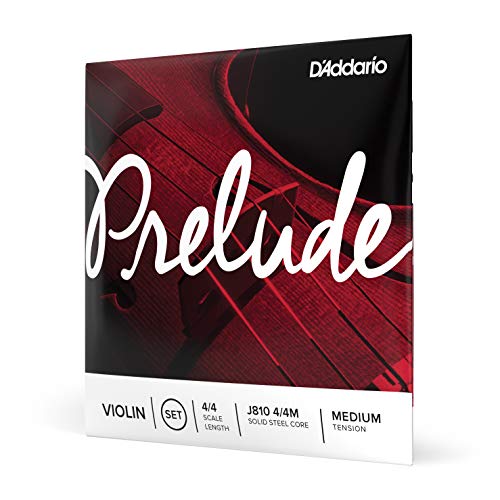
EDUCATOR’S CHOICE — Prelude strings are designed for quick bow response and easy use, combining warm tone with affordability and durability. They are suitable for both new and experienced student violinists.
SOLID STEEL CORE — Built with a solid steel core for durability and a warm sound, Prelude sets come in full and fractional sizes to accommodate different players and instruments.
MADE TO LAST — Sealed pouches protect from corrosion and environmental changes, helping maintain tautness and tone across varying conditions.
Best for: Beginners and schools seeking reliable, affordable strings that still offer a pleasant, warm voice. Caution: Not the most luminous or projection-heavy option for advanced solo performances.
Viotti Violin Strings 4/4 Full Set

INCLUDES GOLD E STRING — This 4/4 synthetic-core set features a premium gold E string for brightness and projection, with silver D & G and aluminum-wound A. The synthetic core provides warmth and stability.
REMOVABLE BALL END OPTION — The set supports a removable ball end, allowing a loop end if preferred, giving tonal flexibility from brighter to warmer notes.
Best for: Players seeking a premium-sounding synthetic-core set with a bright E string and flexible end options. Caution: May be slightly pricier than basic synthetic-core sets.
Buying Guide: Synthetic Core Violin Strings
Key factors to consider when choosing synthetic-core strings include playing level, instrument setup, and desired tone. This guide outlines practical questions and compares options to help you decide.
- What is your playing level and goal? Beginners may prioritize ease of bow response and durability (Prelude, Ascente 4/4). Advancing players may prefer warm, balanced tones and stability (Dominant sets).
- Do you want gut-like warmth or a more modern projection? Synthetic cores trade some gut warmth for stability, with many options offering a rich midrange and clear E strings.
- How important is tuning stability and longevity? Synthetic-core strings excel in pitch stability and resistance to humidity changes, which is helpful for players who travel or perform often.
- What instrument scale do you own? Ensure you pick full-size (4/4) or appropriate fractional sets; many brands also offer 3/4 or 1/2 scales for students, with comparable tension profiles.
- Are there preferences for end fittings? Some sets include ball-end strings; others offer loop-end options to match different tailpieces.
FAQ
- Which synthetic-core string is best for beginners? Prelude and Ascente 4/4M are commonly recommended for easy playability, durability, and consistent response for new players.
- What does “synthetic core” mean for violin tone? It refers to a multi-strand synthetic fiber core designed to mimic gut-like warmth while offering stability, longevity, and reliable tuning.
- Do synthetic-core strings require special maintenance? Basic care is similar to other strings: wipe down after playing, avoid extreme humidity, and store in sealed packaging until use.
- Is a gold E string necessary? Gold E strings can provide brighter projection; many players enjoy this feature, but it isn’t essential for all tones or setups.
- Can I mix brands on a single violin? It’s possible but not typical; mixing sets can produce uneven tensions and tonal balance, so choose a coordinated set when possible.
- How often should I replace violin strings? For student use, replacement every 3–6 months is common; for advancing players and frequent performers, replacement every 1–3 months may be necessary.