
The best tape player to MP3 converter depends on how you want to save your recordings. Choose the KLIM K7 with a 16GB card for a simple, self-contained option; the SEMIER for SD-card or computer-based conversion; the Reshow for USB conversion through a computer; the MYPIN for direct USB flash-drive recording; or the KLIM K7 with a 32GB card for more included storage. Compare the transfer method, storage, and tape-format limitations before choosing.
| Product | Best for | Conversion method |
|---|---|---|
| KLIM K7, 16GB | Simple conversion and portable playback | MP3 files saved to included SD card |
| SEMIER | Choice of SD card or computer workflow | SD card or USB cable with Audacity |
| Reshow | Converting through a laptop or computer | USB connection to a computer |
| MYPIN | Saving recordings directly to a flash drive | USB flash drive, no computer required |
| KLIM K7, 32GB | More included SD-card capacity | MP3 files saved to included SD card |
KLIM K7 Cassette Player With 16GB Card

This KLIM K7 is best for people who want to convert tapes without adding a computer or installing an app. The included 16GB SD card and card reader provide a direct way to store and move converted MP3 files. The player also plays music from an SD card, so it can serve as a portable digital music player after conversion.
Its built-in microphone and speaker add options for recording voice directly to the SD card and listening without headphones. A 3.5mm earphone jack and included earphones support private listening. These features make it a useful choice for buyers who want a compact device for conversion and everyday playback.
Limitation: The product does not record audio onto cassette tapes. Choose another option if recording new audio directly onto tape is essential.
SEMIER Cassette Converter With Two Transfer Options
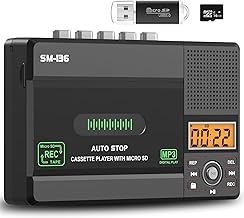
The SEMIER is best for buyers who want to choose between standalone SD-card conversion and a computer-based workflow. It includes a 16GB SD card and supports conversion to MP3 on the card. It can also connect by USB for conversion through Audacity, which the product says is included. That flexibility is useful if you want a direct option but also prefer working with recordings on a computer.
The compact unit has an LCD for navigating recordings and controls. It can play tapes, play SD-card music, and record audio using its built-in microphone. It also supports recording to an SD card. The listed dimensions are 6.3 by 3.9 by 1.2 inches, and the stated weight is 0.52 pounds.
Limitation: It does not support Type IV or metal tapes. The product is specified for Type I tapes, so check your cassette type before buying.
Reshow USB Cassette To Digital Converter

The Reshow is best for buyers who plan to connect a cassette player to a laptop or personal computer for conversion. Its listed method uses a USB cable to transfer cassette audio to digital MP3 format. This computer-connected approach may suit someone who wants to manage the conversion on a computer rather than use a supplied SD card or record directly to a flash drive.
It also works as a standard portable cassette player. The product lists support for standard headphones and a 3.5mm AUX connection, which can be used with earbuds, headphones, or an AUX input such as a car stereo. Its lightweight, compact design is intended for portable listening as well as digitizing tapes.
Limitation: Unlike the SD-card and flash-drive options in this list, the listed conversion method requires a USB connection to a computer. Choose another product if you need a no-computer transfer workflow.
MYPIN USB Cassette Converter Without A Computer

The MYPIN is best for buyers who want to save converted audio directly to a USB flash drive without using a computer during recording. It records cassette audio to a drive and supports manual or automatic recording. Afterward, the drive can be connected to another device to transfer or play the files. Volume control is available during recording and playback.
The product lists compatibility with USB 2.0 and USB 3.0 drives formatted as FAT or FAT32, up to 128GB. It also has auto reverse, which can switch cassette sides while conversion is underway. The stated audio rates are 44.1 and 48 kHz at 16-bit. Power is available through a USB port or two AA batteries; the listing says USB power is more stable.
Limitation: Drive format and performance matter. The product recommends a fast USB drive to help prevent skipping, so verify the drive’s format and read rate if recordings do not play smoothly.
KLIM K7 Cassette Player With 32GB Card

This KLIM K7 is best for buyers who want the straightforward SD-card conversion workflow but prefer a larger included card than the 16GB version provides. It converts cassette audio to MP3 files stored on the included 32GB SD card, and the package includes an SD card reader. The unit can also play music from the card without requiring an additional app or device for conversion.
Like the other listed KLIM K7, this model includes a built-in microphone and speaker, a 3.5mm earphone jack, and earphones. It can record microphone audio directly to the SD card, making it suitable for buyers who also want basic voice recording in the same device.
Limitation: The product does not support recording onto cassette tapes. Its main distinction from the 16GB version in this selection is the included card capacity, not a different stated conversion method.
How To Choose A Tape Player To MP3 Converter
Start by deciding where you want the MP3 files to go. These products use three main workflows: recording to an SD card in the player, recording directly to a USB flash drive, or connecting the player to a computer. The best fit depends on which storage devices you already use and whether you want to work with a computer during conversion.
Do you want to convert tapes without a computer?
Choose a model that records directly to removable storage if you want to avoid a computer during the recording step. The two KLIM K7 models and the SEMIER list SD-card conversion. The MYPIN records to a USB flash drive and is specifically described as requiring no computer for conversion.
A no-computer workflow can reduce setup, but it does not eliminate the need to move files later if you want to listen on a phone, computer, or other device. Consider how you will access the card or drive after conversion. A card reader is included with the KLIM models; the SEMIER includes an SD card, while its listed computer option uses USB and Audacity.
Would you rather convert through a computer?
A computer-based workflow may be preferable if you want to organize and manage audio files on a laptop or desktop as you convert them. The Reshow uses a USB cable for cassette-to-digital conversion. The SEMIER also lists USB conversion using Audacity, in addition to its SD-card method.
Before choosing this route, check the product instructions and the computer setup required for the transfer. Do not assume that a particular computer, operating system, editing tool, or file-management feature is supported unless the product information confirms it. If avoiding software and computer setup is more important, select a direct-to-card or direct-to-drive model instead.
Which storage option fits your collection?
The included storage differs across the products. The KLIM K7 options include 16GB and 32GB SD cards, while the SEMIER includes a 16GB SD card. The MYPIN uses a compatible USB flash drive rather than listing an included card. The Reshow’s listed conversion method connects to a computer.
More storage can be useful when converting many tapes, but card capacity alone does not tell you how many hours of audio will fit. File size depends on recording details, and the provided product information does not specify a total recording time. If choosing MYPIN, check the flash drive’s FAT or FAT32 format and the stated capacity limit of up to 128GB.
Do you need to record new audio, too?
Some models offer microphone recording in addition to tape conversion. Both KLIM K7 listings describe a built-in microphone and recording to the SD card. The SEMIER also lists a built-in microphone and recording to SD card. These functions can be useful for voice notes or other basic recordings, but they are not the same as recording onto a cassette.
Be especially careful if you want to make new cassette recordings. The KLIM listings explicitly say that recording onto cassette tapes is not supported. The SEMIER describes playing and recording, including recording through its microphone, but the listed details do not establish cassette-recording capability. Confirm this requirement with the product instructions before purchase.
Does your cassette type matter?
Yes. Tape-format support can determine whether a converter is appropriate for your collection. The SEMIER listing says it is for Type I tapes and does not support Type IV or metal tapes. The other product descriptions provided here do not specify comparable tape-type limitations. If your tapes are metal or another less common type, do not assume compatibility; check the manufacturer’s detailed instructions first.
Also consider the condition of the tapes and the player. This product information describes conversion functions but does not establish the condition of any individual cassette or guarantee a particular result. For important recordings, consider testing with a less valuable tape before converting an entire collection.
What listening features are useful?
If you want to listen to tapes as well as digitize them, look at the playback connections. The KLIM K7 models include a speaker, a 3.5mm earphone jack, and earphones. The SEMIER lists a speaker, LCD, and compact dimensions. The Reshow lists standard headphone use and a 3.5mm AUX connection. The MYPIN offers playback and volume control.
Choose based on how you plan to listen, not just how you plan to convert. A built-in speaker supports quick listening without headphones, while a headphone or AUX connection may be more useful for private playback or connecting to a compatible input. Confirm the specific connection you need before buying.
Frequently Asked Questions
Can a cassette tape player convert tapes directly to MP3?
Yes. The KLIM K7 and SEMIER models list conversion to MP3 files on an SD card. The MYPIN records to a USB flash drive, while the Reshow and SEMIER also list computer-connected conversion options.
Which converter works without a computer?
The KLIM K7 models and SEMIER list SD-card conversion, and the MYPIN is described as recording to a USB flash drive without a computer. The Reshow’s listed conversion method uses a computer connection.
Does the MYPIN include a USB flash drive?
The provided product details describe using a USB flash drive but do not state that one is included. Check the package contents before buying if you need a drive supplied with the converter.
Can these devices record new audio onto cassette tapes?
The KLIM K7 listings explicitly say they do not support recording onto cassette tapes. The product descriptions for the other models do not establish that capability, so confirm it directly if cassette recording is essential.
Can the SEMIER convert metal tapes?
No. Its listed features say it does not support Type IV or metal tapes and specify Type I tape support. Check your cassette format before choosing this model.
Which model includes the largest stated SD card?
The KLIM K7 version listed with a 32GB SD card includes the largest stated SD-card capacity among these five products. The other listed SD-card options include 16GB cards.