
The right tape-to-computer converter depends on what you need to digitize: RCA video from VHS and camcorders, or sound from an audio cassette. The USB capture card is best suited to recording video through a computer, while the Portta and ClearClick devices are options for recording video without a computer. The SEMIER is designed for audio cassette conversion. Check your tape player’s outputs and the converter’s recording method before choosing.
| Product | Best suited for | Recording approach |
|---|---|---|
| USB Video Capture Card | RCA video transfers to a computer | USB connection |
| Portta VHS to Digital Converter | Video capture with a standalone recorder | Device with remote |
| SEMIER Small Cassette Tape Player | Audio cassette digitizing | USB-C or SD card |
| ClearClick Video to Digital Converter 3.0 | Video and audio from legacy sources | Standalone converter |
| ClearClick Video to Digital Converter 2.0 | Computer-free video recording | USB flash drive or SD card |
USB Video Capture Card For RCA Sources

Best for: People who want to capture video from a VCR, camcorder, DVD player, or other RCA-equipped source on a computer. The product name identifies it as a USB video capture device for converting RCA video to USB, with stated compatibility for PC, Mac, and Windows Vista.
This option is a better fit for users who want a computer in the transfer process rather than a standalone recorder. It is described for VHS, Mini DV, VCR, Hi8, DVD, and camcorder sources. The computer-based approach may suit people who want to manage recordings on a computer, but the product information provided does not specify software, supported file formats, or detailed system requirements.
Why it was selected: It directly matches the common search for a converter that sends analog video to a computer over USB.
Limitation: A compatible tape player or video source is still needed. Confirm that its output connections match the capture card and verify software and operating-system requirements before buying.
Portta VHS To Digital Converter With Remote

Best for: Buyers looking for a video-to-digital recorder that includes a remote and supports several legacy video sources. The listed product name describes compatibility with VHS, VCR, DVR, DVD, Hi8, Mini DV, and gaming consoles.
Unlike a USB capture card that is described as connecting to a computer, this product is presented as a video-to-digital recorder. It may be a better fit for someone who prefers operating a dedicated converter. The product name explicitly notes that a VCR, VHS/DVD player, or camcorder is required, so the device is not a tape player by itself.
Why it was selected: Its stated source range makes it relevant to households with different kinds of analog video recordings, and the remote is a named feature.
Limitation: The supplied product details do not specify the recording destination, file format, resolution, or included cables. Check those details and the source device’s output connections before choosing it.
SEMIER Small Cassette Tape Player
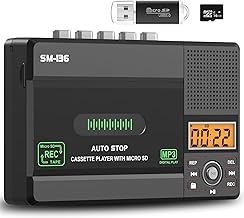
Best for: People digitizing audio cassette tapes rather than VHS or camcorder video. This product is described as a cassette tape player and audio converter that can transfer Type I tapes to MP3 using USB-C or an SD card.
The listed features include recording to a cassette, computer, or SD card via the microphone, as well as a built-in loudspeaker and headphone jack. A 16GB SD card is listed as included. These features make it a more relevant choice for spoken-word recordings, music, or other cassette audio than any of the video converters in this list.
Why it was selected: “Tape to computer” can refer to audio cassettes as well as video tapes. This product addresses the audio-cassette use case directly and names USB-C and SD card as recording options.
Limitation: It is for audio cassette conversion, not VHS or other video tapes. The product information specifies Type I tapes, so buyers with a different cassette type should check suitability before purchase.
ClearClick Video To Digital Converter 3.0

Best for: Buyers who want a standalone converter for a range of analog video and audio sources. The product name lists VCRs, VHS, AV, RCA, Hi8, camcorders, DVD players, turntables, and cassette tapes as sources.
The product is described as recording video and audio, and it requires a working VCR or camcorder and working tapes when those are the source. That makes it a better match for someone who already has functioning playback equipment and wants a separate digitizing device. The listed support for turntables and cassette tapes also makes its stated source range broader than a video-only converter.
Why it was selected: Its named support for several legacy formats makes it a versatile candidate for mixed media collections.
Limitation: It cannot play tapes by itself. The product information does not specify recording resolution or storage details, so confirm these before purchase.
ClearClick Video To Digital Converter 2.0

Best for: Buyers who want to record analog video without using a computer or software. The listed features say it records directly to a USB flash drive or SD card and begins recording with the touch of a button.
It is described for VHS, VCRs, DVD players, DVRs, camcorders, Hi8, and retro gaming systems. The stated recording resolutions are SD 640×480 or 720×480 pixels. The product does not upscale footage to HD and does not record from modern HDMI sources. Both a compatible working playback device and working tapes are required.
Why it was selected: Its direct-to-storage recording method and clearly stated resolution make it easier to compare with computer-connected capture cards.
Limitation: A USB flash drive or SD card is required and is not included. The listed storage support is 512GB or less. Avoid this choice if you need HD upscaling or HDMI capture.
Buying Guide: How To Choose A Tape Converter
Are you transferring audio or video?
Start by identifying the tape format. VHS, Hi8, and camcorder recordings contain video and generally require a video capture device plus a working player or camcorder. Compact audio cassettes contain sound and need an audio cassette player or audio converter. A video capture card will not convert a cassette’s audio simply because both products use the word “tape.”
If your collection includes both audio and video, compare the product’s named source formats rather than relying on a broad label such as “tape converter.” The SEMIER is specifically described for audio cassettes. The other products are principally positioned for video capture, although ClearClick 3.0 also names cassette tapes and turntables among its supported sources.
Do you want a computer-based or standalone workflow?
A USB capture card is the clearest choice if the goal is to send RCA video into a computer. Before buying, confirm that the computer’s operating system and available software are supported. The supplied details for the capture card do not list a specific application or recording file format.
A standalone recorder may suit buyers who do not want to use computer capture software. ClearClick 2.0 explicitly records to a USB flash drive or SD card without a computer or software. Portta is described as a recorder with a remote, but its listed product information does not name the storage destination. Check the manual or current listing for that detail.
What playback equipment and cables do you already have?
A converter generally captures a signal; it does not necessarily play the tape. The ClearClick 2.0 and Portta descriptions make the need for a separate working VCR, camcorder, or other playback device clear. The ClearClick 3.0 description also requires a working VCR or camcorder and working tapes. Check the outputs on your player and compare them with the converter’s stated inputs.
For video, identify whether the player provides RCA or another analog output. Do not assume a converter accepts every connector or includes every cable. Confirm the required cables, power supply, storage media, and computer connections in the product listing before purchasing.
How much video quality do you need?
Digital conversion preserves the signal the playback device sends; it does not restore detail that is missing from an old recording. The ClearClick 2.0 listing specifically states SD recording at 640×480 or 720×480 pixels and says it does not upscale to HD. Choose based on the stated output resolution, not a general promise of “digital” quality.
When a product’s resolution is not provided, such as in the supplied information for the USB capture card and Portta, verify it before deciding. Also consider whether the goal is a convenient viewing copy, a file for archiving, or editing on a computer. Those uses can require different recording controls and file formats.
What storage does the converter require?
Check whether recordings go to a computer, SD card, USB flash drive, or another destination. ClearClick 2.0 requires a USB flash drive or SD card, neither of which is included, and specifies support up to 512GB. SEMIER lists a 16GB SD card as included. The other product details provided here do not specify storage requirements, so confirm them before ordering.
For valuable recordings, plan how files will be backed up after transfer. A memory card or USB drive is a storage location, not necessarily a long-term backup. Keep a second copy on another device or storage medium if the recordings are important.
Frequently Asked Questions
Can I connect a VCR directly to a computer?
Usually, a computer needs a compatible video capture device to receive an analog video signal from a VCR. A USB capture card is one type of device intended to connect an RCA video source to a computer. The VCR and converter must have compatible connections.
Does a video converter play VHS tapes?
Not necessarily. The ClearClick 2.0 and 3.0 product details say a working VCR or camcorder is required and that the converter does not play tapes by itself. Confirm whether a playback device is needed for any model you consider.
Can I use a VHS converter for an audio cassette?
Not by default. VHS converters are designed around video sources, while an audio cassette requires a cassette player or a converter that specifically supports audio cassette recording. The SEMIER is listed for Type I audio tapes.
Will converting an old tape make it HD?
No converter can guarantee HD detail from an older tape. ClearClick 2.0 specifies SD recording and says it does not upscale to HD. Check the output resolution for other models, and expect the result to depend on the original recording and playback equipment.
What should I check before transferring important tapes?
Verify that the tape player works, that the converter accepts its output, and that the computer or storage device is suitable. Make a short test recording first to check sound, picture, and file storage. Handle aging tapes carefully and avoid repeatedly playing a tape that appears damaged.