
The best TRS-to-TRS patch cable depends on the distance between your devices, the number of connections you need, and how much room is available. The AxcessAbles 1-foot six-pack is best for closely placed studio gear; its 1.5-foot multicolor set helps identify connections; and the Rock Stock 4-inch flat cables are best for compact pedalboards. The picks below cover short and longer runs, multipacks, and low-profile connections. Before buying, confirm that your equipment uses 1/4-inch TRS connections and that a balanced or stereo TRS cable suits the signal path.
| Product | Best for | Length and quantity |
|---|---|---|
| AxcessAbles Balanced TRS Patch Cables | Close studio connections | 1 foot; 6-pack |
| AxcessAbles Multicolor TRS Patch Cables | Color-coded routing | 1.5 feet; 6-pack |
| AxcessAbles 3-Foot Multicolor TRS Cables | Longer patch runs | 3 feet; 6-pack |
| Hosa CSS-890 TRS Patch Cable | Multiple three-foot runs | 3 feet; 8-pack |
| Rock Stock Flat TRS Patch Cables | Tight pedalboard spacing | 4 inches; quantity not specified |
AxcessAbles 1-Foot TRS Six-Pack
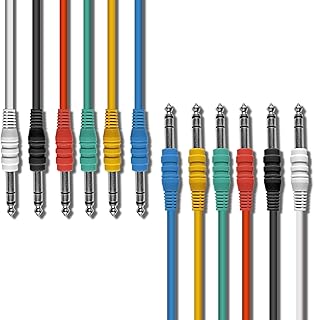
Best for: Connecting nearby studio devices, effects units, or other gear when a short cable helps keep a setup orderly. Each cable is 1 foot long, and the six-pack supplies several matching runs for a small rig or rack.
The product listing specifies 1/4-inch TRS connectors, nickel-plated plugs, oxygen-free copper conductors, and OFC spiral shielding. It describes the cables as suitable for balanced audio connections and for linking equipment such as studio monitors, outboard gear, amplifiers, keyboards, and effects. The short length is useful when the connected devices sit close together.
Why it was selected: This set combines a compact length with a six-cable quantity and listed shielding details, making it a practical option for several short connections. Limitation: A 1-foot cable may not reach devices positioned farther apart; measure the route, including clearance around the connectors, before choosing it.
AxcessAbles 1.5-Foot Multicolor TRS Cables

Best for: Buyers who want several short connections that are easier to distinguish by color. The 1.5-foot length offers more reach than a 1-foot patch cable while remaining intended for nearby outboard or patchbay equipment.
The listing describes these as multicolor 1/4-inch TRS cables for analog or digital effects, outboard gear, and patchbay setups. It lists nickel-plated plugs, oxygen-free copper conductors, and OFC spiral shielding. Color variation can help users visually follow cable routes, though it does not replace labeling or checking the signal path.
Why it was selected: The combination of a six-pack, color options, and a middle-ground length makes it a useful choice when cables need to be sorted and devices are not quite close enough for a 1-foot run. Limitation: The listed length is still short for widely separated equipment, and the product information does not specify individual cable colors or a color-to-channel scheme.
AxcessAbles 3-Foot Multicolor TRS Cables
Best for: Setups that need more reach between TRS-connected devices than a short patch cable provides. The product name identifies this as a three-foot, multicolor, six-pack intended for speaker and studio patch-cable use.
At three feet, these cables are better suited to connections with some distance between devices than the 1-foot and 1.5-foot options in this guide. Their multicolor design can make a bundle of runs easier to visually sort. The supplied product details do not list conductor, shielding, or plug-plating specifications for this particular listing, so buyers who require those details should verify them on the current product page.
Why it was selected: It offers a longer option in a six-pack, useful when short cables would be taut or unable to reach. Limitation: Three feet may leave excess cable in a very compact setup, and the provided information does not describe construction details beyond the product name.
Hosa CSS-890 Three-Foot Eight-Pack

Best for: Buyers who need multiple same-length TRS connections and prefer an eight-cable pack. Hosa lists this model as a 3-foot audio cable with 1/4-inch TRS male connectors at both ends.
The basic specifications make it easy to compare with the other three-foot option: both ends are male TRS, and the length is three feet. That can suit equipment layouts where short patch leads do not provide enough reach. The product details provided here do not state shielding, conductor material, plug finish, or a color-coding system.
Why it was selected: Its eight-pack quantity is the largest specified in this group, making it relevant for users wiring several devices or keeping spare cables. Limitation: The available listing information is brief, so buyers who need specific construction features should check the current product details before purchase.
Rock Stock 4-Inch Flat TRS Cables

Best for: Pedalboards where neighboring pedals leave little room for cable connectors. The product name specifies a 4-inch flat TRS patch cable with right-angle connectors and a low-profile design.
The listing also names gold-plated plugs and braided shielding, and describes the cable as intended to maximize pedalboard space. The very short length can reduce slack between nearby connections. Right-angle plugs may be useful where a straight connector would extend into an adjacent pedal’s space, but the fit depends on the layout and jack position.
Why it was selected: It addresses a different need from the longer studio cables: minimizing cable footprint on a crowded board. Limitation: Four inches is not suitable for devices farther apart, and the supplied details do not specify pack quantity.
Buying Guide: How to Choose TRS-to-TRS Patch Cables
What does TRS mean, and is it the right connection?
TRS refers to a plug with tip, ring, and sleeve conductors. A 1/4-inch TRS cable can carry a balanced mono signal or a stereo signal, depending on how the connected equipment is designed. The plug shape alone does not tell you which signal a device expects. Check the equipment manual or input and output labeling before ordering.
A TRS cable is not automatically interchangeable with every 1/4-inch cable. TS plugs have a different contact arrangement, and some devices specifically require TS connections. Choose a cable type that matches the intended signal and both devices’ sockets.
How long should a patch cable be?
Measure the path between the connection points rather than relying only on the distance between device bodies. Include connector clearance, bends, and any routing around a rack rail or pedal. A cable that is too short may pull on the jack; a much longer cable can create extra slack to route and manage.
- About 4 inches: A compact choice for very close pedalboard connections.
- About 1 foot: Suited to nearby rack, desk, or effects connections.
- About 1.5 feet: Adds modest reach while remaining a short patch lead.
- About 3 feet: Better when devices are farther apart or routing needs more room.
Should you choose a multipack?
Multipacks can simplify a setup when several runs need the same cable type and length. Count the connections you plan to make, then consider whether a spare cable is useful. A six-pack may suit a small group of devices, while the listed Hosa set includes eight cables. Compare the quantity against your actual routing plan rather than buying solely by pack size.
Are color-coded cables useful?
Color variation can help distinguish one cable from another in a crowded rack or patchbay. It is especially useful when several similar-looking runs pass through the same area. However, colors are not a substitute for a consistent labeling system. Do not assume a particular color corresponds to a particular channel unless the cable set or your own setup defines that convention.
What construction details should you compare?
When product listings provide them, compare shielding, conductor material, connector finish, and cable shape. The AxcessAbles 1-foot and 1.5-foot listings specify OFC conductors and spiral shielding. The Rock Stock product name specifies braided shielding, gold-plated plugs, and right-angle connectors. The available Hosa and AxcessAbles three-foot details are more limited, so check the current listing if a particular construction feature matters to your installation.
Shielding is relevant when cables run near potential sources of electrical or radio-frequency interference, but listed shielding does not guarantee a noise-free system. Noise can also come from gain settings, grounding, device wiring, or the signal path. Keep cables arranged sensibly and troubleshoot the complete setup if unwanted noise persists.
When do right-angle or flat plugs make sense?
Right-angle, low-profile plugs can help where straight plugs would protrude into nearby pedals or take up extra board space. They are not automatically the best fit for every jack: check whether the jack faces the correct direction and whether the plug body clears neighboring controls. For rack and desktop connections, standard plugs may be more practical when there is room to route them.
How can you avoid buying the wrong cable?
Confirm the connector size and type at both ends, the required signal format, and the needed length. Check whether the device uses a balanced TRS connection, stereo TRS connection, or another cable type. Also inspect pack count and product-specific construction details, since specifications can vary among models from the same brand.
Frequently Asked Questions
Can a TRS-to-TRS cable connect balanced audio equipment?
Yes, when both devices use compatible 1/4-inch TRS balanced connections. Confirm the input and output specifications because TRS plugs can also be used for stereo signals.
Can I use a TRS cable for stereo audio?
A TRS cable can carry stereo audio when the equipment is designed for that wiring. Check the device documentation; a TRS connector does not always indicate stereo operation.
What is the difference between a 1/4-inch TRS cable and a TS cable?
TRS plugs have tip, ring, and sleeve contacts, while TS plugs have tip and sleeve contacts. Use the connection type specified by the equipment rather than choosing by plug size alone.
Are three-foot patch cables too long for a pedalboard?
They can leave excess slack on a compact pedalboard, but may suit pedals or devices that are farther apart. Measure the route and compare it with the shorter 4-inch option before deciding.
Do gold-plated plugs guarantee better sound?
No. A plug finish alone does not establish overall sound quality. Check connector fit, cable type, signal requirements, and the full construction specifications relevant to your setup.
How many cables should I buy?
Count the connections in your planned setup and choose a pack that covers them, with any spare quantity you consider useful. Match cable length to each route where possible to avoid tension or unnecessary slack.