
The best two-lavalier-mic, one-receiver system depends on where you record: the DJI Mic 2 suits creators who want internal backup recordings, the Movo WMX-20-DUO is designed for camera and recorder setups, and the DJI Mic Mini is a compact option for extended recording. For phones and mixed devices, consider the PQRQP 3-in-1 receiver; for speakers and PA equipment, the HOTEC system offers a 1/4-inch output. Check receiver connections and device compatibility before choosing.
| Product | Best For | Key Detail |
|---|---|---|
| DJI Mic 2 | Creators who want backup audio | Two transmitters with internal recording |
| Movo WMX-20-DUO | Camera-based interviews | UHF system, two lapel mics |
| DJI Mic Mini with Case | Long recording sessions | Ultralight transmitters and case |
| PQRQP 3-in-1 | Multi-device recording | Universal receiver design |
| HOTEC Wireless System | Live voice amplification | 1/4-inch receiver output |
DJI Mic 2: Best for Backup Audio

The DJI Mic 2 kit includes two transmitters, one receiver, and a charging case. It is a strong choice for interviews, vlogs, and other recordings where two people need separate microphones but one receiver needs to connect to the recording setup.
Its standout feature is that each transmitter can act as a standalone recorder, with up to 14 hours of internal recording listed. The product also specifies 32-bit float recording to help preserve clear audio when levels spike. The transmitters and receiver come pre-linked, and USB-C and Lightning adapters are included for different recording scenarios.
- Best for: Creators who want a backup audio path in addition to the receiver-based recording.
- Why it stands out: Two transmitters, internal recording, and included adapters address common interview and mobile-recording needs.
- Consider: Confirm that the included adapter and connection method suit your specific device before recording.
Movo WMX-20-DUO: Best for Camera Rigs
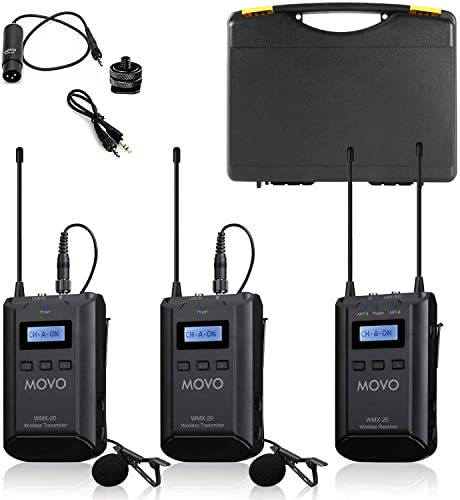
The Movo WMX-20-DUO is a two-transmitter, one-receiver UHF system supplied with two lapel microphones. It is intended for use with DSLRs, camcorders, smartphones, tablets, and other recorders, making it a practical candidate for interviews recorded on camera or a dedicated recording device.
The system operates in two groups of 48 channels, with up to 96 unique frequencies listed. Movo specifies a frequency range of 35 Hz to 18 kHz and a maximum operating distance of 330 feet. Those figures may help buyers compare systems, but real-world performance can depend on the environment and setup.
- Best for: Video makers seeking two lapel mics and a UHF receiver for camera-centered recording.
- Why it stands out: The supplied lapel microphones, channel options, and stated long-range operation suit flexible recording setups.
- Consider: It runs on AA batteries, with up to six hours of runtime listed; plan for battery changes during longer sessions.
DJI Mic Mini: Best for Long Sessions

This DJI Mic Mini configuration includes two transmitters, one receiver, and a charging case. Its transmitters weigh 10 grams each according to the product information, which makes this model a suitable option for people who want a small, discreet microphone to wear during interviews, livestreams, or other extended recording sessions.
DJI lists a maximum transmission range of 400 meters, 48 kHz sampling, and a 120 dB SPL specification. The charging case is listed as providing up to 48 hours of battery life. These specifications make the kit worth comparing for creators who prioritize a lightweight setup and less frequent charging.
- Best for: Interviewers and creators who want lightweight transmitters and a charging case for frequent use.
- Why it stands out: Its two-transmitter configuration, compact 10-gram design, and stated case-supported battery life match long-session needs.
- Consider: The listed 400-meter range is a maximum specification, not a guarantee for every location or recording condition.
PQRQP 3-in-1: Best for Device Flexibility

The PQRQP kit is described as a dual wireless microphone system with a 3-in-1 receiver. The listed device categories include Android phones, iPhones including iPhone 15, laptops, and cameras. Its stated transmission distance is 65 feet, and its features include active noise reduction and an omnidirectional microphone pickup pattern.
This configuration is a useful choice for buyers who switch among device types and want one receiver arrangement to cover several recording scenarios. It is listed for livestreaming, vlogging, and outdoor recording. Because connections differ across devices, confirm the appropriate receiver connector and input support before relying on it for a specific setup.
- Best for: Mobile creators who need a dual-mic kit described for use with multiple device categories.
- Why it stands out: The 3-in-1 receiver and stated 65-foot transmission distance offer a flexible option for close-range recording.
- Consider: The product notes that a laptop’s 3.5 mm connector may not support audio input; do not assume that connection will work.
HOTEC Wireless System: Best for PA Use

The HOTEC system includes dual bodypack transmitters, a mini rechargeable receiver, and headset and lavalier microphone options. Its receiver has a 1/4-inch plug for mixers, PA speakers, and karaoke machines with a compatible 1/4-inch microphone input. An adapter is also listed for recording uses with phones, laptops, and DSLR cameras.
HOTEC specifies an operating range of up to 100 feet line of sight and describes the system as plug and play. It is more oriented toward voice amplification than a compact creator-focused wireless kit, so it is especially relevant to presenters, instructors, and performers who need a receiver that can connect to sound equipment.
- Best for: Presenters or performers who want two wireless microphone channels for compatible PA or mixer equipment.
- Why it stands out: The 1/4-inch receiver output directly addresses live sound setups, and the kit offers headset or lapel mic choices.
- Consider: Check that your sound system has a compatible 1/4-inch microphone input and verify the right microphone option for your use.
Buying Guide: How to Choose Two Lavalier Mics and One Receiver
A dual wireless lavalier system is designed to capture two people while using one receiver connected to a camera, phone, recorder, or sound system. The transmitters are worn by the speakers, and the receiver sends their audio to the recording or amplification device. However, kits differ in connector type, recording features, power, and intended use. Match the complete signal path to your equipment rather than choosing by transmitter count alone.
Which receiver connection does your device need?
Start with the input on the device that will record or amplify the sound. Cameras and recorders may use different input arrangements from phones, while PA speakers and mixers often accept a 1/4-inch connection. Check both the receiver’s output and the device’s input. An adapter can help only when the connected device supports the required audio signal; a connector that physically fits does not necessarily guarantee audio input.
For example, the listed PQRQP information specifically cautions that a laptop’s 3.5 mm connector may not accept audio input. The HOTEC receiver is designed around a 1/4-inch output for compatible sound equipment. These examples show why checking device input specifications matters before a recording or live event.
Do you need two separate microphone channels?
For a two-person interview, confirm that the system includes two transmitters and that both can be used with its single receiver at the same time. Look for the included microphones as well as the transmitters: some kits supply lapel mics, while other designs may offer different wearable microphone options. If both speakers need hands-free audio, confirm that the included microphone style suits their clothing and speaking position.
Also consider how the system handles the two voices in the recording. Product details may describe dual transmitters without fully explaining whether the output is mixed together or recorded on separate channels. If separate editing control is important, check the manufacturer’s documentation for that exact kit before purchasing.
Would internal recording help protect your audio?
Internal recording can provide a backup if the wireless signal or external recording path has a problem. The DJI Mic 2 listing says each transmitter can work as a standalone recorder and specifies up to 14 hours of internal recording. This feature may be useful for interviews and videos that are difficult to repeat. Other systems in this selection emphasize receiver-based wireless audio and do not list the same internal recording feature.
When comparing backup options, check whether recording happens on each transmitter, how long it can record, and how recordings are transferred. Do not assume that every two-transmitter system includes onboard recording just because it can send audio to a receiver.
How much range and battery life do you need?
Think about the distance between the speaker and receiver, and whether there will be walls, people, or other obstacles between them. The listed maximum distances vary across these products, from 65 feet for the PQRQP system to hundreds of feet for the Movo and DJI Mini kits. Maximum figures are specifications, not assurances that a connection will remain stable at that distance in every location.
For battery planning, compare the stated runtime with the length of your sessions. The Movo system lists up to six hours and uses AA batteries. The DJI Mic Mini kit with a case lists up to 48 hours of battery life. Charging-case totals and transmitter operating times may describe different usage conditions, so read the product details carefully.
Is a smaller transmitter or a live-sound receiver more important?
A small, light transmitter can be preferable for on-camera presenters who want the microphone to be less noticeable. The DJI Mic Mini transmitters are listed at 10 grams each. By contrast, people speaking on stage or in a classroom may care more about a receiver that connects directly to a mixer or PA system. In that case, the HOTEC system’s 1/4-inch receiver output may be more relevant than a discreet clip-on design alone.
Consider the recording location as well. Outdoor creators may prioritize range and a backup recording option, while a fixed indoor interview setup may place more value on simple connections and fast setup. Choose based on the main use case rather than trying to maximize every specification.
What should you verify before ordering?
- Confirm the kit includes two transmitters, one receiver, and the microphone elements you need.
- Match the receiver connector to your camera, phone, recorder, mixer, or PA input.
- Check whether adapters are included and whether your device supports audio input through that connection.
- Compare operating range, battery details, and charging arrangements with your typical session length.
- Look for backup recording if losing a take would be especially costly.
- For an event or important shoot, allow time to test the complete setup with your recording device.
Frequently Asked Questions
Can two people use lavalier microphones with one receiver?
Yes. A dual wireless microphone system can use two transmitters worn by separate speakers and send their audio to one receiver. Confirm that the specific kit supports simultaneous use of both transmitters.
Is one receiver the same as one microphone channel?
No. A single receiver can work with two transmitters. Whether the receiver outputs a combined signal or separate channels depends on the product, so verify the details if you need separate editing control.
Can I connect a two-mic system to a phone?
Some kits list phone compatibility or include adapters, but compatibility depends on the phone, receiver connector, and audio input support. Check the exact device and connection before buying.
What is the benefit of internal transmitter recording?
Internal recording stores audio on a transmitter, creating a potential backup separate from the receiver connection. The DJI Mic 2 listing includes this feature; do not assume other systems in this article offer it.
Which system is suited to a PA speaker?
The HOTEC system is the clearest fit in this selection for compatible PA equipment because its receiver has a 1/4-inch plug. Confirm that the speaker or mixer has a compatible microphone input.