
For jazz played on an acoustic upright bass, start by comparing full-size double basses with the setup and sound you need; the products listed here include one electric double bass and four learning resources or electric basses, not a conventional acoustic upright. The Stagg EDB-3/4 is the closest instrument match, while the books are relevant for developing jazz bass skills. The Squier Jazz Bass is a fretted electric alternative, not an upright bass.
| Product | Best suited for | Type |
|---|---|---|
| Stagg EDB-3/4 BK | Players seeking a 3/4-size electric double bass | Electric double bass |
| John Patitucci Walking Bass | Bassists practicing walking lines | Instructional book |
| The Jazz Bass Book | Players studying jazz bass technique and tradition | Instructional book |
| Dirt Simple Upright Bass | Upright bass players seeking a learning resource | Instructional book |
| Squier Classic Vibe 60s Jazz Bass | Players considering a fretted electric alternative | Electric bass guitar |
Stagg EDB-3/4 BK Electric Double Bass

Best for: Players who want a 3/4-size electric double bass rather than a traditional acoustic upright. The listed features include solid maple construction, electronics designed for double bass, a gig bag, and a 3/4 size. Those details make it the closest instrument match in this selection for someone seeking an upright-style jazz instrument.
The electric design is an important distinction. It is not described as an acoustic upright bass, so buyers seeking the unamplified resonance and construction of a traditional orchestral or jazz double bass should compare acoustic models instead. The product listing identifies it as black and states that a gig bag is included.
- Choose this if: You want a double-bass format with dedicated electronics and a 3/4-size body.
- Better for: Players whose needs include an electric instrument, rather than a strictly acoustic bass.
- Limitation: The supplied details do not specify pickup controls, output connections, setup, or acoustic performance.
John Patitucci Walking Bass

Best for: Jazz bassists who want to work on walking basslines across chord sequences. The title identifies upright and electric bass as intended instruments, making the subject relevant to double bass players as well as electric bassists. It is a paperback instructional book, not an instrument.
Walking bass is a central skill for many jazz settings: the bassist outlines harmony and supports the time feel through moving quarter-note lines and other rhythmic approaches. The book’s stated focus on playing over any chord sequence makes it relevant to players building a practical vocabulary for changes. The listing names John Patitucci, Tim Pettingale, and Joseph Alexander as authors.
- Choose this if: Your priority is learning to create walking lines over chord progressions.
- Better for: Bassists who already have an instrument and want a focused jazz study resource.
- Limitation: The supplied product details do not state the book’s difficulty level, lesson format, or included audio materials.
The Jazz Bass Book

Best for: Bass players looking for a book about jazz bass technique and tradition. John Goldsby is the listed author, and the product is identified as a paperback in the Bass Player Musician’s Library. Its topic makes it a relevant study option for upright bassists exploring the broader language and history of jazz bass playing.
This is a learning resource rather than a bass purchase. The title emphasizes both technique and tradition, so it may suit a buyer who wants a wider subject focus than a book dedicated specifically to walking lines. The supplied listing does not detail its chapters or indicate whether it includes exercises, notation, or recordings.
- Choose this if: You want a jazz-bass book whose stated scope includes technique and tradition.
- Better for: Players seeking a broad topic-based resource rather than a specifically named walking-bass method.
- Limitation: The available product information does not identify its intended skill level or exact instructional contents.
Dirt Simple Upright Bass
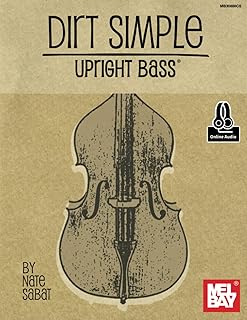
Best for: Upright bass players looking for a resource specifically identified as an upright bass book. Nate Sabat is the listed author, and the format is paperback. Its instrument-specific title makes it relevant to shoppers researching how to learn or improve on upright bass, although the provided details do not describe its lessons.
Because the listing does not provide feature information beyond the title, author, and format, buyers should check the full book description to confirm that its method matches their goals. The product may be considered alongside jazz-specific resources, but the available information does not establish that its contents focus on jazz.
- Choose this if: You want a book whose stated subject is upright bass.
- Better for: Buyers who are open to checking the full listing for the particular method and topics they need.
- Limitation: Jazz coverage, playing level, exercises, and included learning materials are not specified in the supplied details.
Squier Classic Vibe 60s Jazz Bass

Best for: Players considering a fretted electric bass as an alternative for jazz study or performance. The listed features say it is designed by Fender, inspired by 1960s-era Jazz Bass models, and equipped with Fender-designed alnico pickups. Its Daphne Blue finish and laurel fingerboard are included in the product name.
This is a standard electric bass guitar, not an upright or double bass. It may suit a bassist who wants a Jazz Bass-style electric instrument, but shoppers seeking the posture, scale, or acoustic sound of an upright should not treat it as a substitute without considering those differences.
- Choose this if: You want a fretted electric bass inspired by 1960s Jazz Bass models.
- Better for: Buyers whose search includes electric jazz basses, not only acoustic upright instruments.
- Limitation: It is not an upright bass, and the supplied details do not specify its dimensions or included accessories.
Buying Guide: How To Choose An Upright Bass For Jazz
The most important first decision is whether you need a traditional acoustic upright, an electric double bass, or a fretted electric bass guitar. These instruments can all be used in music-making, but they are not interchangeable in construction or playing experience. In this selection, only the Stagg is identified as an electric double bass; the Squier is an electric bass guitar, and the other three products are books.
Do you need an acoustic or electric double bass?
An acoustic upright produces its sound through the body of the instrument. An electric double bass uses electronics, and its amplified sound depends on the instrument’s electronic system and amplification setup. The Stagg listing specifically describes double-bass electronics and solid maple construction, but it does not provide enough detail to compare its tone or controls with other models. If acoustic sound is essential, look for a product explicitly described as an acoustic double bass.
What size should you compare?
The Stagg is listed as 3/4 size. Size can affect how an instrument fits a player and how practical it is to transport, but the supplied product information does not give measurements or guidance for choosing a size. Before buying any upright bass, check the manufacturer’s size details and consult a bass teacher or music shop if you are uncertain about fit.
Which features matter for jazz use?
For an instrument, compare the type of bass, size, construction, electronics if applicable, and what is included. For a learning resource, compare the stated subject: walking lines, jazz technique and tradition, or upright bass more generally. This product group includes books that address different learning needs, but their full lesson contents are not supplied here.
- For walking bass practice: John Patitucci Walking Bass is explicitly described as covering walking lines on chord sequences for upright and electric bass.
- For jazz technique and tradition: The Jazz Bass Book identifies those topics in its title.
- For upright-specific study: Dirt Simple Upright Bass is the most directly named upright-bass learning resource, but its jazz focus is not specified.
Are electric bass guitars suitable alternatives?
A fretted electric bass guitar may be a suitable choice for someone whose goal is to play jazz on electric bass. It is not the same instrument as an upright bass. The Squier Classic Vibe 60s Jazz Bass is described as a 1960s-inspired electric model with Fender-designed alnico pickups. Choose it only if an electric bass guitar fits your goal; choose an upright or double bass if you specifically want that instrument format.
What should you verify before ordering?
Read the complete product listing for details not included in the information above. For an instrument, confirm its exact type, dimensions, included accessories, electronic connections, and setup requirements. For a book, check the description for skill level, notation, exercises, and any accompanying materials. This helps avoid assuming that a product includes features not stated in its listing.
Frequently Asked Questions
Is the Stagg EDB-3/4 BK an acoustic upright bass?
No. It is listed as an electric 3/4-size double bass with electronics designed for double bass. The supplied features do not describe it as an acoustic upright.
Which listed product is most directly about upright bass?
Dirt Simple Upright Bass is the book whose title specifically names upright bass. The available details do not specify its skill level or whether it focuses on jazz.
Which book focuses on walking basslines?
John Patitucci Walking Bass is described as teaching walking basslines on chord sequences for upright and electric bass.
Is the Squier Classic Vibe 60s Jazz Bass an upright bass?
No. It is an electric bass guitar inspired by 1960s-era Jazz Bass models, with Fender-designed alnico pickups. It is not a double bass.
What should a beginner compare before choosing an upright bass?
Compare acoustic versus electric construction, instrument size, included accessories, and setup requirements. If choosing a book, verify that its subject and difficulty level match your learning goals.