
Best Volume Amplifiers for Headphones for Crisp, Loud, Clear Audio
Looking for a reliable headphone amplifier to boost your personal listening or studio monitoring? This guide highlights five compatible models, each best for different listening needs. Whether you’re a mobile listener, a home studio user, or an audiophile, these options help you extract more detail, headroom, and control from any 3.5mm or 6.35mm headset. The following selections emphasize impedance ranges, two-stage gain, and portable versus desktop usability to match common buying intents.
Summary at a glance: the table below compares key traits to help you pick quickly. All models support common headphone impedances, offer gain control or bass adjustments, and are suitable for different environments—from portable use to desktop setups. Consider your headphone impedance, desired output level, and whether you need RCA or 6.35mm compatibility when choosing.
| Product | Best For | Impedance Range | Output Type | Notes |
|---|---|---|---|---|
| Neoteck 16-300 Ohm Portable Headphone Amplifier | Mobile listening, broader device compatibility | 16–300Ω | 3.5mm | Aluminum finish, two-stage gain |
| TNP Portable 3.5mm Headphone Amplifier | Audiophile upgrades on the go | Various via 3.5mm/6.3mm | 3.5mm | Analog volume, RCA option |
| eSynic Rechargeable 16-600Ω Amp | Balanced, higher-impedance headphones | 16–600Ω | 3.5mm | Rechargeable, dual-stage gain |
| LZSIG 4-Channel Headphone Amplifier | Multi-headphone sharing | 32–100Ω per channel | 1/4″ and 3.5mm | Bass boost, ultra-low noise |
| YGiTK 16-300Ω Portable Amp | Audiophile-grade portable listening | 16–300Ω | 3.5mm | 2-stage gain, aluminum build |
Neoteck 16-300 Ohm Portable Headphone Amplifier
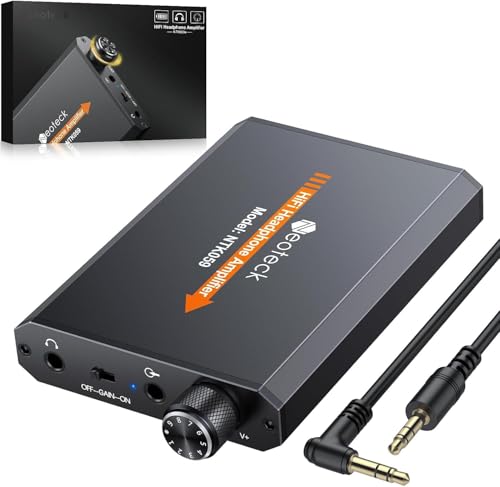
This Neoteck model covers 16–300Ω headphones, offering high signal-to-noise ratio and ultra-low THD+N. It is ideal for travelers and everyday use with mobile devices, delivering a purer, quieter background while boosting volume and tone. Best for listeners who want clearer audio on the go and easier control for diverse headphone types.
Best for: casual listeners who use mixed headphones and mobile devices. Why selected: strong impedance range, compact form, and a premium aluminum finish that helps heat stability and reduces interference. Limitation: not optimized for multi-headphone sharing or desktop studio setups.
TNP Portable 3.5mm Headphone Amplifier

The TNP amplifier emphasizes higher clarity and dynamics for many headphones, including larger over-ear models. It includes a smooth analog volume knob and supports both 3.5mm and 6.3mm outputs, plus RCA input compatibility. Best for listeners who value precise volume control and flexible output options in a compact, desk-friendly form.
Best for: desktop listeners who want simple, reliable control with versatile input/output. Why selected: straightforward gain control, mixed input formats, and a compact footprint. Limitation: requires a separate power source or USB input, which can limit pure portability.
eSynic Rechargeable 16-600Ω Headphone Amplifier

eSynic’s model is built for higher impedance headphones, with a dual-voltage circuit to maintain clean output across a wide impedance range. It offers over 100dB SNR and a dual-stage gain selector to adapt to different headphones. Best for: users with high-impedance headphones seeking consistent, studio-like clarity on the go or at a workstation. Limitation: data notes about power efficiency; charging can be needed after long sessions.
LZSIG 4-Channel Headphone Amplifier
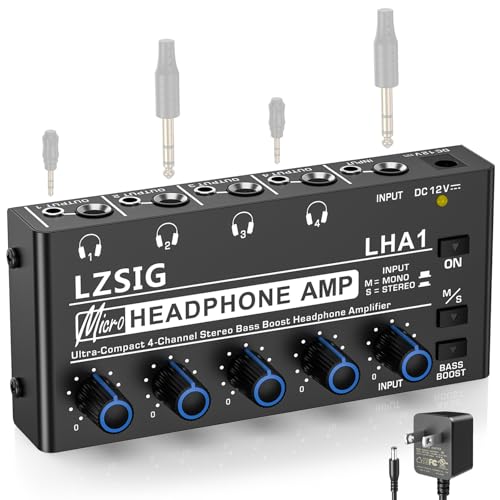
Designed for home studios and stage use, this four-channel unit enables independent volume control per channel and supports multiple headphone geometries. It delivers ultra-low-noise performance with bass boost and compatibility across 3.5mm and 6.35mm jacks. Best for: small studios or shared listening environments where multiple users need synchronized monitoring. Limitation: more complex setup than single-channel units.
YGiTK 16-300Ω Portable Headphone Amplifier
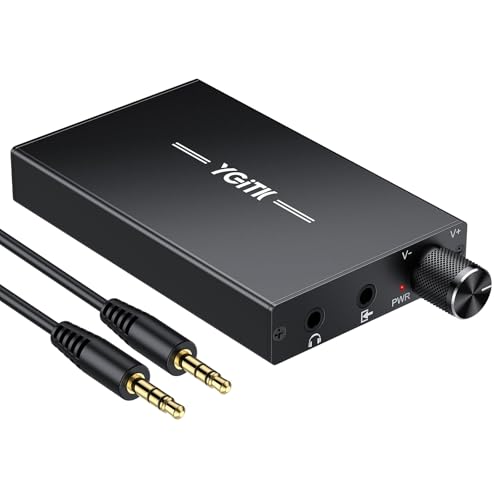
YGiTK emphasizes studio-grade fidelity with a 16–300Ω range and a two-stage gain switch plus a volume knob. The aluminum frosted build aids shielding and durability, while the universal 3.5mm jack supports many devices. Best for: audiophiles seeking clean, uncolored amplification in a portable form. Limitation: compact devices may lack extensive bass-boost features for some bass-forward headphones.
Neoteck 3.5mm Headphone Amp with Bass Boost

This Neoteck model adds a bass boost option for listeners who want deeper low-end without sacrificing clarity. It supports 3.5mm connections and emphasizes low distortion with high SNR performance. Best for: listeners who crave enhanced bass with minimal tonal shift in mid/high frequencies. Limitation: bass boost may overshadow delicate acoustic details for some tracks.
Buying Guide: Key Purchase Considerations
Headphone impedance compatibility matters. If your headphones are low-impedance (below 32Ω), any compact portable amp with clean gain helps avoid hiss and clipping. For high-impedance headphones (50–600Ω), look for models with higher output power and two-stage gain to maintain listening volume without distortion.
Gain stage design can affect noise and headroom. Two-stage gain switches help tailor performance to the headphone type, reducing noise for sensitive in-ear monitors and delivering more power for studio headphones. Choose units that clearly label gain ranges and provide smooth, predictable control.
Output format influences compatibility. A versatile amp should offer 3.5mm and 6.35mm options or RCA inputs to connect to various sources like audio interfaces, DACs, or portable players. If you plan to share listening, a multi-channel amp can be advantageous.
Build quality and shielding matter for portable use. Aluminum housings or alloy builds minimize RF/EMI interference and improve heat management, which supports longer sessions without audible degradation.
Power options affect portability. Rechargeable batteries enable on-the-go use without a wall wart, but consider run time and charging needs. Fixed-power units are often lighter and simpler but require a dedicated power source in a desk setup.
FAQ
- What impedance should I look for in a headphone amplifier?
Choose an amp that covers your headphones’ impedance. If you have 16–32Ω IEMs or 32–300Ω over-ear models, look for models labeled 16–300Ω or 16–600Ω ranges to ensure proper drive and minimal distortion.
- Do I need a DAC in addition to a headphone amp?
A dedicated DAC is not always required. An amp with built-in DAC is convenient for USB sources. If your source already provides clean digital-to-analog conversion, you can pair a standalone amp with a simple DAC in between.
- Is bass boost useful, or does it degrade audio accuracy?
Bass boost can enhance low-end impact, but it may obscure midrange detail on some tracks. Use it selectively and prefer units offering toggle or adjustable levels.
- Can I use a headphone amplifier with multiple headphones?
Yes, some models are multi-channel or shareable, like four-channel units. For shared listening, ensure each headphone has its own level control to avoid sudden volume changes.
- Will a portable amp significantly improve my phone listening?
It can improve clarity and volume for high-impedance or sensitive headphones, especially when the phone’s internal amp is insufficient. For low-impedance IEMs, gains should be carefully managed to avoid distortion.
- How important is build quality for a headphone amp?
Durable construction and effective shielding help maintain signal integrity and longevity, particularly in mobile or desk environments where devices may pick up interference.