
Best Wah Wah Guitar Pedals for Expressive Tones on Stage and in Studio
Answering the search for the best wah wah guitar pedals, this guide highlights top options that deliver classic and modern swells. These picks are suited for players aiming for bold lead tones, vocal-like wah sweeps, and reliable performance in various genres. Whether you’re chasing iconic Cry Baby sounds, versatile presets, or compact pedalboard footprints, these products help you shape your tone with clarity. The list focuses on pedals that are widely used in live rigs and studio setups, offering clear sound, robust construction, and practical controls for quick tonal shifts.
Summary table of chosen products:
| Product | Brand | Best For | Key Benefit |
|---|---|---|---|
| Dunlop Original Cry Baby Standard Wah (GCB95) | Jim Dunlop | Classic rock, funk, and expressive lead lines | Iconic tone with Fasel inductor for lush sweeps |
| Dunlop Cry Baby 535Q Multi-Wah | Jim Dunlop | Versatile genres, variable Q and boost | Six wah ranges with adjustable boost |
| Cry Baby Mini Wah | Jim Dunlop | Space-saving boards, gigging players | Full sweep in a compact footprint with voice options |
| Donner Mini Auto Wah Pedal | Donner | Auto-wah textures, envelope filter tones | Fast tracking and four controls for dynamic filtering |
| LEKATO Guitar Wah Pedal | LEKATO | Budget-friendly dual function, home/studio use | Vintage wah plus active volume in one unit |
Dunlop Original Cry Baby Standard Wah (GCB95)

The Dunlop Cry Baby Standard Wah (GCB95) is a benchmark in expressive guitar tones. It uses the iconic Fasel inductor for a lush, vocal-like sweep and is tuned for a bold, modern voice. This pedal is best for players seeking reliable, classic Cry Baby performance with a strong midrange presence. The control layout is straightforward, making it easy to dial in a pronounced cry without sacrificing versatility. A potential limitation is that some players may prefer more modern optimizations in shaping ultra-scooped or boutique tones.
Best for: Players who want a proven, stage-ready wah with a signature response. Why selected: It remains a reference point for bold, expressive sweeps and dependable build quality. Caution: The classic circuit may feel less flexible for ultra-clean, high-headroom rigs.
JIM DUNLOP 535Q Multi-Wah Guitar Effects Pedal

The 535Q Multi-Wah blends a six-position wah range with a switchable boost, allowing a wide spectrum from bright, aggressive tones to dark, singing leads. It is best for players who want one pedal that can cover multiple vintage and modern wah voices without swapping units. This model is chosen for its flexible range control, which provides clear, repeatable tonal trajectories. Limitation: It may be more complex than a single-voice wah for players who prefer minimal controls onstage.
Best for: Players who need a wider tonal palette within a single pedal. Why selected: The six range options enable quick adaptation across songs and styles. Caution: The boost can be overpowering in some settings if not dialed in carefully.
Cry Baby® 95Q Wah

The Cry Baby 95Q Wah combines a refined voice with a selectable boost and adjustable Q. This design lets players tailor both the intensity and edge of the wah to fit their rig. It is well-suited for players who want to push from a vocal-like cry to a more subtle, velvety sweep. The 95Q line is promoted for producing a highly controllable dynamic feel that responds well to touch. Limitation: Some users may find the extra controls add complexity during fast-set changes on stage.
Best for: Players seeking a configurable cry with an adjustable boost. Why selected: It offers more control over tone shaping without abandoning the familiar Cry Baby character. Caution: Setups with noisy rigs might require careful grounding to maintain clean operation.
Donner Mini Auto Wah Pedal
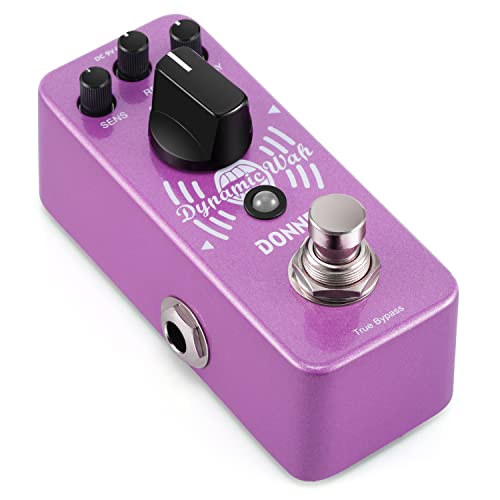
The Donner Mini Auto Wah Pedal delivers envelope-filter style wah with fast tracking and a compact footprint. It’s best for players who want a space-saving option that still provides expressive auto-wah textures. The four control knobs—SENS, RES, DECAY, and RANGE—let players shape sensitivity, filter sharpness, decay rate, and frequency range. A caution: Auto-wah behavior can be sensitive to picking dynamics, so precise playing technique may influence the result more than with standard wah pedals.
Best for: Players who want a compact, auto-wah option with adjustable envelope response. Why selected: It provides dynamic, auto-filter tones with straightforward controls, ideal for funk and groove-based styles. Caution: May require careful technique to avoid over-responsiveness in fast passages.
LEKATO Guitar Wah Pedal And Active Volume

The LEKATO Wah Pedal combines an analog dual circuit with an active volume control, housed in a durable aluminum body. This option is best for players who want a two-in-one solution that preserves space on smaller boards. It aims to reproduce classic wah sweeps with a robust, vintage feel while adding volume control for on-the-fly level matching. Limitation: The two-in-one design may not satisfy players who need independent, dedicated control layouts for each function at all times.
Best for: Players seeking a budget-friendly dual-function pedal. Why selected: It merges vintage wah sound with practical volume control, suitable for compact setups. Caution: The enclosure is lighter, so stability during heavy stomping should be checked in transport.
Buying Guide: Key Purchase Considerations
What kind of wah tone do you want?
Classic cry and voice-like sweeps remain favored for rock and blues. If you want more modern, aggressive tones with precise control, consider multi-wah options or pedals with adjustable Q and vocal peaks.
Do you need a compact setup or a full-featured pedal?
Compact pedals save space and weight on crowded boards. Full-featured options offer more tone sculpting but require more room and a deeper learning curve.
Is an auto-wah acceptable for your genre?
Auto-wah pedals provide envelope-filter textures that are especially popular in funk, disco, and modern pop. They respond to dynamics differently than traditional wah pedals and can be more sensitive to playing style.
How important is a brand’s classic sound?
Classic brands like Dunlop maintain consistent voice across generations. If you want a familiar response that is easy to swap in a live rig, a Cry Baby model is a reliable choice.
How will you power and mount the pedal?
Consider power supply requirements, battery life for pedals with internal buffers, and whether you need a true-bypass option to preserve tone when off.
What will your budget and board space allow?
Budget-friendly options often deliver good tonal results, while premium models emphasize build quality, tonal nuance, and long-term reliability. Assess your board’s layout to ensure the chosen pedal fits and remains easy to reach.
Practical tips for use
- Dial in a default sweep that complements your guitar’s pickups and amp settings.
- Use the boost on multi-wah models sparingly to avoid overpowering your lead tone.
- Test auto-wah in a live mix to ensure it tracks cleanly with your picking dynamics.
Quick FAQ
- What is a wah in guitar gear? A wah is a pedal that modifies a guitar’s tone to create a voice-like effect by sweeping a filter across frequencies.
- Which pedal is best for classic rock tones? The Dunlop Cry Baby Standard Wah (GCB95) is a strong legacy choice for classic, bold wah tones.
- Do I need a boost with a wah? Some models include a boost to push solos or loud sections, which can be beneficial in live settings.
- What’s the advantage of a compact wah? A compact wah saves space on crowded boards and is ideal for gigging musicians who travel light.
- Are auto-wah pedals suitable for funk? Yes, auto-wah textures are popular in funk and modern grooves for quick, dynamic filtering.
- Can I mix wahs on one board? Yes, but it requires careful signal routing to avoid phase issues and noise. Place the most-used or most dynamic pedal first for easier access.