
Best Wired Personal Monitor System for Stage and Studio Use
Answering the demand for reliable wired personal monitor systems, this guide highlights top options suited for live performers, band members, pastors, and studio professionals who want clear, on-stage monitoring without wireless interference. The featured products emphasize sound isolation, ease of use, and durable construction. The top picks integrate robust headphones or IEMs, clean signal paths, and practical controls. Below, choose the model that best fits your setting, from pro stage rigs to more affordable studio-focused kits. A compact buying table summarizes the key picks for quick comparison.
| Product | Best For | Key Benefit |
|---|---|---|
| Shure PSM300 P3TRA215CL | Stage performers needing reliable isolation | Premium sound with SE215 isolation and robust build |
| Phenyx Pro PTM-11 | Budget-conscious professionals | Mono monitoring with separate outputs and strong range |
| Galaxy Audio AS-950P2 | Entry-level to mid-range users | Affordable system with clear indicators and simple controls |
| Xvive U4 | Traveling performers and rehearsal spaces | 2.4 GHz, long range, low latency, multi-channel |
| Phenyx Pro PTM-10 | Stereo versatility in varied venues | Stereo/Mono options, broad frequency use, sizable range |
Shure PSM300 P3TRA215CL Pro Wireless in-Ear System

The Shure PSM300 P3TRA215CL is designed for precise personal monitoring with SE215 sound-isolating earphones and all-metal components. It belongs to the PSM300 family, known for reliable wireless performance and clear sound via Audio Reference Commanding. Best for live performers who require isolated, high-fidelity monitoring on stage. A potential limitation is the need for battery management and occasional maintenance of receiver controls in busy setups.
Phenyx Pro PTM-11 Mono Wireless In-Ear System

This mono monitor system emphasizes focused, stable mono audio with separate left/right outputs to the mixer. It is well-suited for pastors, conference hosts, or live performers who need reliable mono monitoring and simple setup. It supports up to 50 selectable frequencies and offers a practical PAD switch to prevent overload. Consider its mono focus if your mix benefits from a single, centered reference rather than stereo imaging.
Galaxy Audio AS-950P2 Wireless In-Ear Personal Monitor System

The AS-950P2 offers an affordable entry into personal monitoring with a 50 mW x 2 output on the receiver and straightforward transmitter controls. It’s best for budget-conscious performers seeking reliable, simple monitoring without extra features that complicate setup. A limitation is that it may lack some advanced metering found on higher-priced systems.
Xvive U4 Wireless In-Ear Monitor System
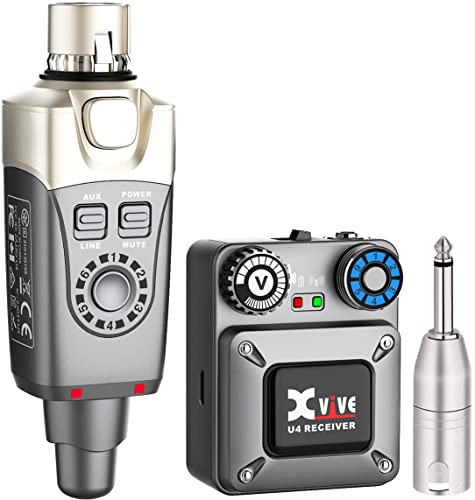
The Xvive U4 provides 2.4 GHz wireless monitoring with a 90-foot range and six channels, delivering low latency and flexible multi-channel operation. It’s ideal for small clubs and rehearsal spaces where portability matters. Best for performers who prioritize on-the-move flexibility, but be mindful that 2.4 GHz can be more prone to interference in crowded RF environments.
Phenyx Pro PTM-10 UHF Stereo Wireless In-Ear System

This stereo system supports true stereo monitoring with 89 tunable frequencies and up to 5 systems working simultaneously. It delivers better spatial detail for performances requiring directional cues. Choose this if you want stereo imaging with broad compatibility and strong range. A potential caution is the greater number of settings to manage in live scenarios, which can increase setup time for new users.
Shure PSM300 Twin Pack Pro Wireless In-Ear System

The PSM300 Twin Pack provides a two-performer monitoring solution with durable metal body packs, ideal for duos or small bands. This option is best for performers who require consistent, independent monitoring for two teammates. It may be overkill for solo performers and requires more management of individual mixes and batteries.
Buying Guide
What should you consider when choosing a wired personal monitor system?
- Monophonic vs stereo: Mono models focus on a centered mix; stereo systems deliver spatial cues. Select based on your performance needs and venue acoustics.
- Frequency range and interference: UHF generally offers better stability in crowded RF environments; 2.4 GHz models are portable but can face more interference.
- Output and connections: Look for systems with clear L/R outputs, XLR/1/4″ options, and reliable receiver indicators for quick setup on stage.
- Battery life and build: Metal enclosures and long-lasting batteries help withstand active performance schedules and frequent transport.
- Ease of use: Simple pairing, clear displays, and intuitive controls reduce setup time and onstage adjustments.
Frequently Asked Questions
- What is the main advantage of a wired personal monitor system over wireless?
Wired systems generally offer more consistent signal quality with less interference and latency variability on stage. - Which feature matters most for live vocalists?
Clear isolation and reliable, low-latency monitoring that matches the onstage tempo and phrasing. - Is stereo monitoring always better than mono?
Not always; stereo provides spatial cues, but mono can deliver a more focused, centered reference for certain performances. - What should I consider when choosing a budget option?
Ensure basic mono or stereo monitoring, reliable output levels, and durable construction for transport and use in venues. - Do I need a two-person system for a duo?
Yes, if each performer requires independent monitoring; otherwise, a single unit with a personal mix may suffice.