
For wireless earbuds with no cord between the earpieces, the JLab Go Air Pop+ is a compact true-wireless option, while the over-ear-hook model is better suited to active workouts. The TOZO OpenEarRing is designed for people who want an open-ear fit, and JOYWISE advertises up to 16 hours of playtime. One listed Sony model is wired, so it is not a match for buyers who specifically want cord-free earbuds.
| Product | Best For | Key Listed Feature |
|---|---|---|
| JLab Go Air Pop+ | Everyday true-wireless use | Dual Connect and EQ3 sound |
| Wireless Bluetooth 5.4 Earbuds With Earhooks | Running and workouts | Earhooks and advertised 50-hour playtime |
| TOZO OpenEarRing | Open-ear listening | Clip-on design and advertised 40-hour playtime |
| JOYWISE Bluetooth Headphones | Exercise and water-resistant use | IPX7 rating and advertised 16-hour playtime |
| Sony MDR-EX15LP | Buyers willing to use a cord | Wired 9 mm driver earbuds |
JLab Go Air Pop+ Earbuds

Best for: Buyers looking for a straightforward, cord-free earbud option for everyday listening. The product listing highlights Dual Connect and EQ3 sound, two features that distinguish it from models focused primarily on workout retention or open-ear listening.
Choose this model if you want wireless earbuds without a cable linking the left and right earpieces and prefer a product described with selectable sound EQ options. Dual Connect is also listed as a feature, although the available product information does not explain its operation in detail.
Why it is included: It is explicitly identified as earbuds and includes features relevant to routine listening. The listing does not provide a playtime figure in the supplied product details, so buyers who prioritize battery duration should compare it with options that advertise a total playtime.
Limitation: The provided information does not specify water resistance, a secure-fit attachment, or battery runtime. Avoid choosing it solely for demanding workouts or long listening sessions unless you confirm those details on the product listing.
Bluetooth 5.4 Earbuds With Earhooks

Best for: Runners and gym users who want an added retention feature. The listed earhooks wrap around the ears, which may suit buyers who prefer a more supported fit than ordinary in-ear earbuds provide.
The product name also advertises Bluetooth 5.4, up to 50 hours of playtime, an ENC noise-cancelling microphone, HiFi stereo sound, and an IPX7 waterproof rating. These claims make it the most workout-oriented option in this group based on the supplied listing details.
Why it is included: Its earhooks and sport-focused description directly address common concerns for cord-free workout earbuds: keeping the earpieces in place and using them during exercise. The advertised long playtime may also interest buyers who want fewer charging interruptions.
Limitation: The 50-hour figure is an advertised total, and the provided details do not explain how it is divided between the earbuds and charging case. Confirm runtime conditions and fit before relying on it for a particular training schedule.
TOZO OpenEarRing Open-Ear Earbuds
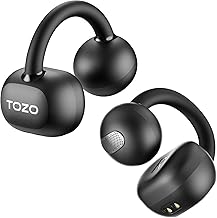
Best for: Listeners who prefer an open-ear, clip-on style rather than earbuds that sit inside the ear canal. Its design may appeal to people who want to hear some surrounding sound while listening, though the supplied product details do not describe the level of sound leakage or awareness.
The listing specifies Bluetooth 5.4, lightweight comfort, a secure-fit design, a smart digital LED display, and up to 40 hours of playtime. Its clip-on construction makes it distinct from the conventional in-ear options in this selection.
Why it is included: It gives buyers seeking no-cord earbuds a different wearing style. Choose it if avoiding an in-ear seal is a priority and the open-ear format fits your listening needs.
Limitation: The product name mentions driving, but the supplied information does not establish that it is appropriate or safe to wear while driving. Follow local laws and keep attention on the road; do not treat earbuds as a substitute for safe driving practices.
JOYWISE Bluetooth Headphones

Best for: Buyers who want Bluetooth in-ear headphones for running, gym sessions, or workouts and value a stated water-resistance rating. The listing describes IPX7 waterproofing, sound isolation, a microphone, and Bluetooth 5.3.
JOYWISE advertises up to 16 hours of playtime and describes the product as having AI music creation. Those features may interest shoppers comparing everyday listening and exercise use. The product name calls them wireless headphones and in-ear Bluetooth earphones, but the supplied details do not clearly explain the physical connection between the two earpieces.
Why it is included: Its workout positioning, microphone, and IPX7 claim make it relevant to buyers seeking wireless audio for exercise. Check the product images and full listing to confirm whether its design meets your definition of “no cord,” especially if you want two independent earbuds.
Limitation: The supplied details do not specify whether the earbuds are fully separate or connected by a cable. Do not assume a true-wireless design from the word “wireless” alone.
Sony MDR-EX15LP Wired Earbuds

Best for: Buyers who are open to wired earbuds and want a simple in-ear alternative. The listed feature is a 9 mm dome-type driver unit.
Important distinction: This Sony model is not a wireless earbud. Its product name identifies it as a wired headphone, so it does not satisfy the main requirement of listening with no cord. It is included only to clarify a mismatch in the supplied product choices, not as a recommendation for cord-free use.
Why it may still matter: A wired model can be relevant to shoppers comparing wireless and conventional earbuds, or to someone who does not mind a cable. For a strict no-cord purchase, choose one of the wireless options above instead.
Limitation: The cord means this model cannot provide the fully untethered listening experience requested by buyers searching for wireless earbuds with no cord.
Buying Guide: How to Choose Wireless Earbuds With No Cord
Do you mean true wireless or simply Bluetooth?
“Wireless” can describe different designs. True-wireless earbuds have separate left and right earpieces with no cable between them. Other Bluetooth headphones may connect to a phone wirelessly while still linking the earpieces with a cord or band. If you want no cord at all, look for explicit wording such as “true wireless” or verify the product images and design description before ordering.
This distinction matters for the JOYWISE listing: it says Bluetooth and wireless, but the supplied information does not confirm whether the earpieces are independent. The Sony MDR-EX15LP is clearly wired and should be ruled out if a cable-free design is essential.
Which fit is better for running and gym sessions?
Fit depends on personal preference and activity. Earhooks can offer additional support around the ear, making the Bluetooth 5.4 sport earbuds a strong match on paper for buyers concerned about earpieces shifting during movement. Conventional in-ear earbuds may be a better fit for shoppers who prefer a smaller, less conspicuous design.
Check the product listing for included ear-tip sizes and fit details before buying. The supplied information does not give those specifics for every model. A secure fit is useful for exercise, but no product description can guarantee that a particular earbud will fit every person.
Should you choose open-ear or in-ear earbuds?
Open-ear clip-on earbuds such as the TOZO OpenEarRing do not follow the conventional in-ear form described by the other wireless options. This style may appeal to people who dislike an ear-canal seal or want a different wearing feel. In-ear models may be preferable to buyers who want the earpiece to sit inside the ear.
Open-ear designs can differ in how much surrounding sound reaches the listener and how much audio other people hear. The supplied TOZO details do not quantify either point. Consider your listening environment and check the complete product information if sound isolation or privacy is important.
How should you compare advertised battery life?
Compare playtime claims carefully. The product names here advertise up to 50 hours for the earhook sport earbuds, up to 40 hours for the TOZO OpenEarRing, and up to 16 hours for JOYWISE. The provided information does not specify test conditions or explain whether each figure includes charging-case capacity. Treat these as listing claims, not guaranteed continuous runtime.
If you listen for long stretches, look for detailed battery specifications in the full listing, including single-charge playback time and case recharging capacity. Do not compare total-hour figures as though they necessarily describe the same measurement.
What do water-resistance labels tell you?
JOYWISE advertises an IPX7 rating, and the Bluetooth 5.4 earhook model also lists IPX7 waterproofing. These are the only products in the supplied details with a stated rating. JLab and TOZO do not have a water-resistance rating listed in the information provided, so avoid assuming they are suitable for sweat or rain without checking their current specifications.
Water-resistance ratings do not mean a product is suitable for every wet environment. Read the manufacturer’s instructions for cleaning, exposure, and charging, and do not charge earbuds while wet.
What features matter for calls and sound settings?
For calls, JOYWISE lists a microphone, while the earhook earbuds advertise an ENC noise-cancelling microphone. These descriptions identify call-related features but do not provide measured call quality. If clear calls are a priority, check whether the full listing explains microphone performance in noisy places.
JLab lists EQ3 sound, which may be useful to shoppers who want sound-setting options. The supplied description does not define the available EQ profiles. Compare the complete product details if a particular sound mode or control method is important.
What should you confirm before buying?
- Confirm that both earbuds are separate if you require a completely cord-free design.
- Check the listed battery runtime and whether it includes charging-case recharges.
- Match the fit style to your activity: in-ear, earhook, or open-ear clip-on.
- Verify any water-resistance rating rather than assuming all Bluetooth earbuds resist sweat.
- Review microphone, sound-control, and connection details if calls or device switching matter.
- Make sure the model is wireless; the Sony MDR-EX15LP listed here is wired.
Frequently Asked Questions
What are wireless earbuds with no cord called?
They are commonly called true-wireless earbuds when the left and right earpieces are separate and no cable connects them. Confirm the design in the product details because some Bluetooth headphones still use a cord between the earpieces.
Are all Bluetooth earbuds completely cord-free?
No. Bluetooth means the earbuds connect wirelessly to a device, but some models still have a cable or band linking the earpieces. Look for an explicit true-wireless design if you want no cord between the earbuds.
Which listed option is best for workouts?
The Bluetooth 5.4 sport earbuds are the clearest workout-focused option in the supplied descriptions because they list earhooks, an IPX7 rating, and sport use. JOYWISE also advertises running and gym use, but its physical connection between earpieces is not specified here.
Which listed earbuds have a stated IPX7 rating?
JOYWISE Bluetooth Headphones and the Bluetooth 5.4 earhook sport earbuds both list IPX7. Check the full product instructions for the limits of water exposure and care.
Is the Sony MDR-EX15LP wireless?
No. The Sony MDR-EX15LP is identified as a wired in-ear headphone, so it does not meet a requirement for wireless earbuds with no cord.
Do the advertised playtime figures mean continuous listening?
Not necessarily. The supplied product names advertise total playtime figures, but they do not explain the testing conditions or whether charging-case power is included. Check the full specifications for single-charge runtime.