
Best Wireless Microphones for Amplifiers and PA Systems
If you’re shopping for a wireless microphone to pair with an amplifier, this guide highlights five reliable options. These picks are suitable for home karaoke, classrooms, churches, weddings, and small-stage performances. They balance range, ease of use, and versatility for different environments. The top choices are best for active speakers, event hosts, teachers, and performers who need freedom of movement without signal dropouts.
Summary table of selected products
| Product | Best For | Notes |
|---|---|---|
| HUACAM Wireless Microphone | Karaoke, Weddings, Churches | Long range, rechargeable, plug-and-play |
| JBL Wireless Two Microphone System | Professional events, DJ hosts | Dual-channel, JBL sound |
| MICVISTA 2.4G Dual | Speakers, PA, classrooms | Two mics, easy pairing |
| Aokeo Wireless Microphone | Church, conferences | UHF, rechargeable, reliable |
| SAYTINAI Wireless Microphone Headset | Hands-free speaking | Headset + handheld option |
HUACAM Wireless Microphone System

Features: Wireless Freedom with up to 200 feet line-of-sight range; rechargeable microphone and receiver with built-in 1200 mAh batteries; charging time over 7 hours; LED display with green/ red indicators; plug-and-play pairing; compatible with 6.35mm and 3.5mm mic jacks. Suitable for home karaoke, church, weddings, conferences, speeches, and small stage performances.
Best for: Event hosts and performers who need substantial range and a stylish, battery-powered setup. The system’s long reach helps avoid crowding around the mixer.
Why selected: It offers a self-contained rechargeable pair, simple pairing, and broad compatibility with common mic interfaces, reducing setup complexity for live events.
Caution: The AUX interface is not applicable for this model, so ensure your amplifier has a compatible mic input (6.35mm or 3.5mm).
Pyle Channel Microphone System

Features: Dual-channel wireless system with separate volume controls; coverage in the 174–216 MHz range; stable signal with low distortion; suitable for PA, karaoke, and DJ parties.
Best for: Small venues or parties where separate mic channels are beneficial for duet performances or multitalker events.
Why selected: The dual-channel design makes it easier to manage two voices simultaneously, which is useful for interviews, duets, or panel-style events.
Caution: The system relies on a specific fixed frequency range; verify compatibility with your local broadcasting or event setup if interference could be a concern.
JBL Wireless Two Microphone System
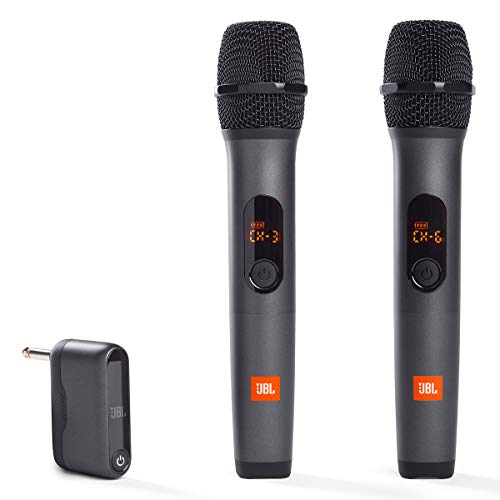
Features: Dual-channel receiver for two handheld mics; JBL Original Pro Sound for clear voice performance; up to 6 hours of playback with rechargeable receiver; plug-and-play setup for quick use.
Best for: Professional events and entertainers who require reliable sound clarity and a straightforward setup for two speakers.
Why selected: The JBL branding and “Original Pro Sound” emphasis suggest robust vocal clarity and reliable performance for amplified speaking or singing.
Caution: Real-world performance can vary with room acoustics; ensure your venue has suitable power and space to support the system.
Aokeo UHF Wireless Microphone

Features: UHF handheld dynamic microphone with rechargeable receiver; range up to 120 feet line-of-sight; wide compatibility with 6.35mm and 3.5mm jacks; designed for church, events, and small venues.
Best for: Venues prioritizing a stable UHF signal with decent range and simple connection to amplifiers and mixers.
Why selected: The UHF band generally offers reduced interference in crowded RF environments, which helps in lively event settings.
Caution: Some setups may require careful placement to minimize potential interference in highly populated RF spaces.
SAYTINAI Wireless Microphone Headset

Features: 2.4G wireless headset mic and handheld mic 2-in-1; range up to 160 feet; 1/8″ and 1/4″ plug options; suitable for PA systems, voice amplification, fitness training, and teaching.
Best for: Hands-free speaking and fitness instruction, or situations where a headset mic makes movement easier.
Why selected: The versatility of a combined headset and handheld option covers dynamic performances and stationary speaking alike.
Caution: 2.4G systems can occasionally suffer from interference in crowded RF spaces; ensure the receiver and transmitter are correctly matched and tested before use.
Buying Guide
What should you consider when buying a wireless mic for an amplifier?
- Choose a system with a range that fits your venue. Larger spaces benefit from longer-range or UHF systems to minimize dropouts.
- Dual-channel setups are ideal for events with two speakers. If you only need one mic, a single-channel model keeps things simple and affordable.
- Look for rechargeable batteries to avoid ongoing battery costs and interruptions during events; check charging time and battery capacity.
- Ensure the receiver’s outputs match your amplifier’s inputs (6.35mm or 3.5mm). Some models omit AUX compatibility, which can limit use with certain devices.
- UHF systems often encounter less interference than VHF. For 2.4G systems, check for Wi-Fi or Bluetooth conflicts in crowded spaces.
- Plug-and-play pairing helps quick setup, especially for hosts, teachers, or mobile performers who move between locations.
FAQ
- What wireless mic is best for a small church? A system with good range, reliable battery life, and easy setup is ideal. The HUACAM and Aokeo options offer long range and straightforward pairing suitable for church environments.
- Can I use a wireless mic with any amplifier? Most wireless mics output via 6.35mm or 3.5mm jacks, which are common on many amplifiers. Check your device input compatibility before purchase.
- Is a headset mic better for movement? Yes. Headset mics provide hands-free operation and consistent positioning, which is helpful for instructors and performers.
- Do I need two mics for a duo performance? If two people are speaking or singing simultaneously, a dual-channel system (like the JBL or Pyle options) is advantageous to avoid crowding and to maintain balanced audio.
- What’s the difference between UHF and 2.4G systems? UHF generally offers better resistance to interference in crowded RF spaces, while 2.4G can be simple and scale well for multi-user setups but may be more prone to interference in busy environments.
- How important is battery life? Longer battery life reduces the need for frequent recharging during events, which is essential for reliability in weddings, conferences, and classrooms.