
The best wireless mic sound system depends on whether you need microphones to connect to an existing speaker or want a complete portable sound setup. The JBL system suits buyers who already own a compatible speaker, while the CYY and WinBridge combine microphones with speakers. For multiple performers, the Phenyx Pro four-channel set and Aveek four-microphone system offer more handheld microphones.
| Product | Best For | Microphone Setup |
|---|---|---|
| JBL Wireless Two Microphone System | Existing JBL speaker setups | Two microphones and receiver |
| CYY Portable Karaoke Machine | Portable karaoke | Speaker and two microphones |
| Phenyx Pro PTU-5000-4H | Events with four speakers | Four-channel receiver and microphones |
| Aveek Wireless Microphone System | Long sessions and larger spaces | Four rechargeable microphones |
| WinBridge S97 Voice Amplifier | Speaking, teaching, and singing | 60W speaker and two wireless mics |
JBL Wireless Two Microphone System
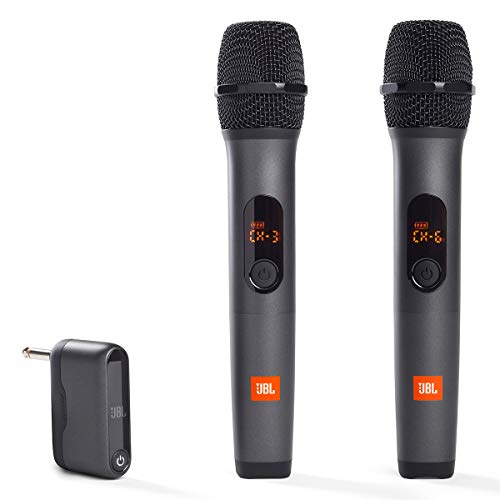
This JBL system pairs two wireless microphones with a rechargeable dual-channel UHF receiver. The microphones are designed to send both voices to a connected speaker, where they can be mixed together. JBL describes the sound as clear and resistant to delay or distortion, and the stated playback time is up to six hours.
- Best for: Buyers who already have a speaker and need two wireless microphones.
- Why it was selected: The dual-channel receiver handles two microphones, and the listed setup is plug and play: turn on the receiver and microphones to get started.
- Consider: This is a microphone and receiver system, not a standalone speaker. Confirm that your audio setup can accept the receiver before choosing it.
Choose this if simplicity and a two-person setup matter more than having a complete portable karaoke machine. The rechargeable receiver reduces the need to manage a separate receiver power supply, while the listed six-hour playback time gives buyers a useful planning figure.
CYY Portable Karaoke Machine

The CYY karaoke machine combines a portable speaker and two wireless microphones in one system. Its listed features include a 15-watt, 6.5-inch speaker, Bluetooth 5.2, colored lights, and support for Micro TF cards, USB drives, and AUX input. The product information also lists a guitar-amplifier function and radio and media-player capabilities.
- Best for: Families and casual karaoke users who want an all-in-one portable system.
- Why it was selected: It includes two microphones and its own speaker, so buyers do not need to assemble a separate microphone-and-speaker setup.
- Consider: The product listing says no screen is included. Each microphone also requires two AA batteries, which are not included.
The unit is described as handheld or shoulder-carried, weighs 4.4 pounds, and measures 8.5 by 4.8 by 10.7 inches. Its stated playback time is six to eight hours per charge. Choose this system if portability and multiple ways to play music are more important than a separate, expandable PA setup.
Phenyx Pro Four-Channel UHF System

The Phenyx Pro PTU-5000-4H is a four-channel wireless microphone system for setups that need several vocal microphones. Its dynamic cardioid microphone cartridges are designed to pick up vocals while rejecting unwanted noise. The receiver has an LCD screen with frequency information and individual volume controls for balancing the microphones.
- Best for: Event hosts, venues, and sound operators who need four microphone channels.
- Why it was selected: Four fixed UHF frequencies and separate volume controls make it more suitable for multi-microphone use than a basic two-mic kit.
- Consider: The frequencies are fixed, so this system does not offer the same tuning flexibility as a tunable-frequency model. Check that its listed frequencies are appropriate for your location and setup.
The product information lists frequencies of 541.9, 546.3, 561.6, and 568.65 MHz, with a stated range of up to 260 feet. It also includes snap-on BNC antennas and a memory switch that retains the last settings. Choose it when multiple presenters or performers need dedicated microphone channels and receiver-side level control.
Aveek Four-Microphone Wireless System

The Aveek system is listed as a four-microphone wireless set with cardioid dynamic microphones and a stated wireless range of up to 262 feet. Its product description emphasizes real-time audio transmission for vocals and performances. Each handheld microphone has a built-in rechargeable battery, with up to 40 hours of use and Type-C charging stated in the listing.
- Best for: Buyers who need four microphones and want rechargeable handheld units for extended sessions.
- Why it was selected: The combination of four microphones, a long claimed range, and rechargeable batteries addresses larger groups and longer events.
- Consider: The listed features do not specify all receiver connection details. Confirm the receiver’s outputs and your speaker or PA inputs before buying.
Choose this if a four-mic configuration and reduced battery replacement are priorities. The stated 262-foot range is a manufacturer-listed figure, not a guarantee for every venue; walls, obstacles, and other wireless equipment can affect practical performance. As with any multi-microphone kit, verify that your sound system can accept and mix the receiver’s output.
WinBridge S97 Wireless PA System

The WinBridge S97 combines a listed 60-watt portable speaker with two wireless microphones. The product is positioned for karaoke and PA tasks such as teaching, public speaking, tour guiding, and fitness instruction. It supports Bluetooth streaming and USB, TF card, and AUX connections. The system also has dual microphone ports and a dedicated guitar or instrument port.
- Best for: Teachers, presenters, and performers who want one portable system for speech and music.
- Why it was selected: It combines a speaker, two wireless microphones, music inputs, and instrument support in one product.
- Consider: The included microphones have different formats: one is handheld, while the other can be worn as a headset, neckband, or held. Buyers who require two identical handheld microphones should check this distinction.
The handheld microphone includes four listed vocal effects: Acoustic, Professional, Pop, and Hip-Hop. The second microphone’s wearable options can be useful when speaking or teaching while keeping hands free. Choose this system when an integrated speaker and several kinds of audio input matter more than a standalone receiver for an existing PA.
Buying Guide: How To Choose A Wireless Mic Sound System
Do you need a microphone system or a complete speaker system?
A wireless microphone system typically includes microphones and a receiver, but it may rely on a speaker, mixer, or PA system you already own. The JBL and Phenyx Pro options fit this category. An all-in-one system, such as the CYY or WinBridge, includes a speaker as well as microphones. Decide first whether your existing audio equipment can amplify the microphones.
For an existing PA, check the receiver’s output and your amplifier or speaker’s input. The supplied product details do not provide every connection specification for every model, so verify the exact ports in the product information before purchase. Do not assume that all receivers connect directly to all speakers.
How many microphones do you need at once?
Two microphones are generally a practical starting point for duets, interviews, or a presenter and guest. A four-channel set is more appropriate when several people need separate microphones. Compare the number of included microphones with the number of channels the receiver can handle; microphone count alone does not establish how many can operate simultaneously.
Also consider whether microphones need individual volume adjustment. The Phenyx Pro four-channel receiver lists separate volume controls, which can help balance multiple voices. In a simpler system, check whether the volume controls are on the receiver, microphones, or speaker.
What wireless range is sufficient?
Range figures can help compare products, but listed distances are not a promise of identical performance in every room. The Aveek listing states up to 262 feet, and the Phenyx Pro four-channel listing states up to 260 feet. HUACAM’s separate dual-microphone model lists 200 feet in line of sight. Obstacles, venue layout, and wireless interference can affect the usable distance.
For a classroom or small room, the farthest stated range may not be the main decision factor. For outdoor events or larger venues, consider line of sight and where the receiver can be placed. Keep the receiver near the performance area when possible and test the system in the intended setting before an event.
Should you choose rechargeable or replaceable batteries?
Rechargeable equipment can reduce the need to keep disposable batteries on hand, but it must be charged between uses. The JBL receiver is rechargeable, and Aveek lists built-in rechargeable microphone batteries with Type-C charging. CYY specifies that its microphones use two AA batteries each and that batteries are not included. Check whether battery life and charging arrangements fit the length and frequency of your events.
Which sound and connection features matter?
For spoken presentations, look for a system that suits the room and offers straightforward volume adjustment. For karaoke, prioritize the number of microphones, music-input options, and whether the product includes its own speaker. The CYY supports Bluetooth, Micro TF cards, USB, and AUX, while WinBridge lists Bluetooth, USB, TF card, and AUX playback along with a guitar port.
Cardioid dynamic microphones, like those described for the Phenyx Pro and Aveek systems, are intended to focus on sound from the microphone’s front. This does not eliminate the need for sensible speaker placement and volume management. Avoid placing a microphone directly in front of a loudspeaker, as feedback can occur in many amplified setups.
What should you check before ordering?
- Confirm whether the product includes a speaker or only microphones and a receiver.
- Match the number of included microphones to the number of people who need to speak or sing.
- Check receiver outputs and speaker or mixer inputs for a compatible connection.
- Review battery type, charging method, and stated operating time.
- Consider whether you need individual microphone volume controls or adjustable frequencies.
- For fixed-frequency systems, review the listed frequencies and local operating requirements.
- Think about portability, setup time, and whether the system will be used indoors, outdoors, or in multiple locations.
Wireless Mic Sound System FAQ
Does a wireless microphone system include a speaker?
Not always. Some products include microphones and a receiver that connect to a separate speaker or PA. The CYY karaoke machine and WinBridge S97 include a speaker, while the JBL and Phenyx Pro products are microphone systems for use with compatible audio equipment.
Can two wireless microphones work at the same time?
They can when the system is designed for multiple microphones. The JBL system has a dual-channel receiver for two microphones. For a larger group, choose a system whose receiver supports the number of microphones you intend to use.
Is UHF better than Bluetooth for live microphones?
UHF microphone systems use a dedicated wireless link, while Bluetooth is often used to stream music to a speaker. The appropriate choice depends on the product and use case. Check the connection design, number of microphone channels, and compatibility with your audio equipment rather than relying on the wireless label alone.
Can I use these systems for both karaoke and presentations?
Many can serve both purposes if they provide suitable vocal amplification and music playback. The WinBridge S97 is listed for singing and speaking tasks, while CYY is presented as a karaoke machine with several music inputs. For a receiver-only system, you also need a compatible speaker or PA.
Are advertised wireless ranges guaranteed indoors?
No. Published range figures describe the manufacturer’s stated capability, but walls, people, distance, and competing wireless signals can change real-world performance. Test the system in the venue and keep the receiver positioned to maintain a clear signal path when practical.