
Best Wireless Rechargeable Microphone System for Flexible, Clear Sound
Answering the need for dependable, rechargeable wireless mics, this guide compares top options ideal for home karaoke, churches, weddings, and small events. The best picks emphasize long range, stable UHF signals, and built‑in rechargeable batteries. This buyer’s guide highlights who each product is best for and why it stands out, plus a quick comparison table to help you decide at a glance.
| Product | Range | Mics | |
|---|---|---|---|
| ~260 ft | Home parties and karaoke enthusiasts | ||
| ~295 ft | 4 rechargeable handhelds | Small venues and family gatherings | |
| Up to 260 ft | 4 fixed-frequency handhelds | Professional events and fixed-stage setups | |
| ~328 ft | 2 rechargeable handhelds | Weddings, churches, and larger rooms | |
| Up to 6 hours playback | 2 handheld mics | Simple plug‑and‑play for quick setups |
TONOR Bluetooth Wireless Microphones, TW-790

The TW-790 uses the PRO-UHF chip for stable signal transmission across a 262 ft (80 m) range with 100 UHF frequencies. The cardioid dynamic handheld mic delivers clear voice reproduction and minimizes background noise. The two rechargeable mics provide a combined 10 hours of use after a 2–3 hour charge, with the receiver charging bases that power both mics simultaneously. Best for home karaoke, small parties, and casual events where reliability matters and quick recharging is convenient.
Who this is best for: households or clubs that need a simple, rechargeable dual‑mic system with strong range. Why selected: excellent signal stability and plug‑and‑play charging help keep events moving without frequent battery swaps. Caution: ensure your venue has minimal RF congestion to avoid occasional interference in crowded spaces.
Bietrun 4-Channel Wireless Microphones System

This 4‑channel system offers up to 295 ft (90 m) range and five adjustable frequencies per mic, reducing interference for multi‑speaker events. Each handheld mic has a built‑in 1200 mAh rechargeable battery with a 3–4 hour recharge time and about 7+ hours of use. The kit includes a dual charging cable and a UL‑certified plug. Best for conferences, church services, or family events where multiple voices are on stage.
Who this is best for: organizers needing more than two channels without sacrificing reliability. Why selected: SAW signal connection technology minimizes dropouts. Caution: the system relies on lawful UHF bands; verify local regulations before deployment.
Phenyx Pro 4-Ch UHF Fixed Frequency PTU-5000-4H

This fixed‑frequency 4‑channel system uses precise frequencies to deliver an ultra‑stable signal and minimal distortion. The LCD on the receiver shows each frequency with dedicated volume controls for balance. It offers up to 260 ft of wireless range and a memory switch for quick setup. Best for professional events and venues that require consistent, plug‑and‑play operation.
Who this is best for: sound techs and venues needing stable, repeatable performance with quick reconfiguration. Why selected: fixed frequencies reduce interference in busy environments. Caution: fixed channels may require careful planning if adjacent systems are used nearby.
TONOR Rechargeable Wireless Mic System, TW750
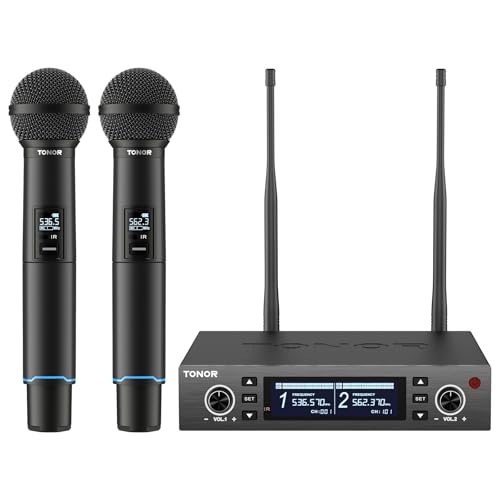
This dual‑mic system features auto‑scan and IR pairing for fast, stable setup and 328 ft (100 m) transmission range. The cardioid dynamic mics deliver clear, authentic sound suitable for karaoke, weddings, speeches, and church services. It supports multiple audio interfaces (6.35 mm / 3.5 mm / XLR) for easy connection to various sound systems.
Who this is best for: performers who value quick pairing and broad compatibility. Why selected: extended range and auto‑scan pairing minimize downtime between acts. Caution: ensure compatibility with your specific mixer or amplifier input if you rely on XLR or USB connections.
JBL Wireless Two Microphone System
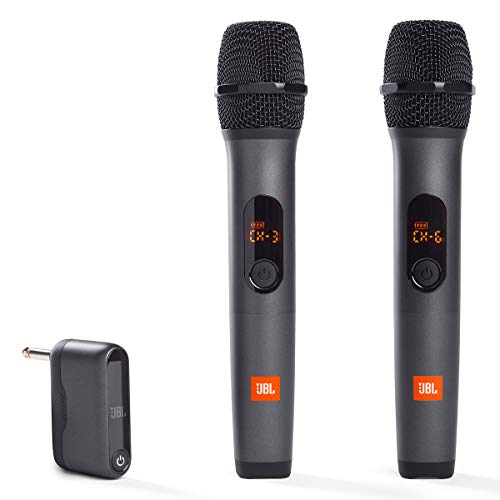
JBL’s dual‑mic system emphasizes high vocal quality and seamless two‑mic mixing. The rechargeable dual‑channel UHF receiver provides up to 6 hours of playback with simple plug‑and‑play setup. This option is ideal for quick setups where reliability and sound clarity are priorities, such as small to mid‑sized events.
Who this is best for: event hosts and venues seeking straightforward operation with reliable JBL voice quality. Why selected: easy start‑to‑finish setup and balanced stereo output. Caution: may be less flexible in channel customization compared to multi‑mic systems with more channels.
Buying Guide
What to consider before buying a wireless microphone system
- Range and environment: Choose a system whose range comfortably covers your typical room or venue and consider potential RF interference from nearby devices.
- Number of mics: More channels help when multiple speakers or performers are on stage. If you only need two mics, pick a dual‑mic system.
- Battery life and charging: Look for rechargeable batteries and a convenient charging method, especially for longer events.
- Frequency management: UHF systems offer stable signals but require attention to frequencies to avoid interference. Fixed frequency systems reduce drift, while auto-scanning models adapt to the available band.
- Sound quality: Cardioid dynamic mics help minimize feedback and background noise. Consider whether the system supports additional inputs for external microphones or instruments.
- Compatibility: Check outputs (XLR, 6.35 mm, 3.5 mm) and whether the receiver can connect to your existing mixer or speaker system.
- Portability and setup time: Systems with quick pairing and lightweight design save time for mobile events.
Which system should you choose?
- Best for home karaoke and casual gatherings: TONOR TW-790 or TONOR TW750 for simple, reliable operation and rechargeable mics.
- Best for multi-speaker events in small venues: Bietrun 4-Channel or Phenyx Pro PTU-5000-4H for multiple mics and stable fixed frequencies.
- Best for quick setups and church services: JBL Wireless Two Microphone System for simple integration and solid vocal quality.
- Better for larger events with more control: BEKBOES or Aveek options provide flexible channels and long ranges—if available in your region.
Practical tips for setup and use
- Test the system in the actual venue ahead of time to identify potential interference.
- Label mics and charging bases to prevent mix‑ups during events.
- Keep receivers away from metal objects or large electronic devices that can cause RF reflections.
- Backup plan: have spare batteries or a spare mic ready in case of a battery issue or mic dropout.
FAQ
- What range is typical for wireless mic systems? Most in this list offer 200–328 ft (60–100 m) of range under optimal conditions.
- Do these systems require special licenses? In the US, many UHF wireless mics operate in licensed or unlicensed bands; always verify local regulations and channel usage.
- Can I connect these to a standard PA system? Yes, many mics offer 6.35 mm, 3.5 mm, or XLR outputs compatible with typical PA setups.
- What about battery life during long events? Rechargeable mics typically provide 6–12+ hours per charge, depending on usage and model.
- Is there a risk of feedback? Cardioid mic designs and proper stage placement help minimize feedback; ensure proper gain staging at the mixer.
- Are there fixed-frequency options? Yes, fixed-frequency units offer stable performance in venues with RF congestion.