
The best XLR 2-to-1 cable depends on which connector arrangement your equipment needs: two female XLR connections feeding one male plug, or one female connection feeding two male plugs. The Tisino and Devinal cables are options for joining two XLR outputs into one input, while the HUALEU and Cable Matters female-to-dual-male cables suit splitting one output to two inputs. These passive cables do not replace a mixer, and combining two active audio outputs may cause signal problems.
| Product | Connector arrangement | Best for |
|---|---|---|
| Tisino XLR Y-Splitter | 2 female to 1 male | Short balanced connections |
| Devinal XLR Splitter | 2 female to 1 male | Shielding and a longer lead |
| Cable Matters XLR Y Cable | 1 female to 2 male | Sending one output to two inputs |
| HUALEU XLR Y Splitter | 1 female to 2 male | A two-pack with shielding features |
| Cable Matters Balanced Splitter | 1 male to 2 female | Connecting two cables to one input |
Tisino XLR Y-Splitter Cable

Best for: Routing two XLR connections to one input when the source arrangement is appropriate for a passive cable. The Tisino has two female XLR connectors and one male XLR connector, with a 1.5-foot cable.
The product description specifies pin-to-pin wiring: pin 1 connects to pin 1, pin 2 to pin 2, and pin 3 to pin 3. It also lists 20 AWG oxygen-free copper conductors and shielding. Those details make it a clearly described option for standard three-pin balanced XLR equipment.
Why it was selected: The connector direction, length, and wiring are stated plainly, making it easier to compare with other 2-female-to-1-male cables.
Limitation: A passive Y cable does not mix two independent microphone or line-level outputs safely in every setup. Use a mixer or purpose-built summing device when combining active sources.
Devinal Dual-Female XLR Y Cable

Best for: Buyers who need two female XLR connections to one male input and want a two-foot cable with multiple shielding materials. The product lists 22 AWG oxygen-free copper, foil and braid shielding, and a metal shell.
Devinal describes this cable for connecting two microphone cables to one mixer or PA input. Its stated features include gold-plated plugs, a braided outer cable, and a heavy-duty metal shell. The two-foot length offers more reach than a very short adapter, though the setup still needs to be appropriate for passive signal routing.
Why it was selected: Its connector layout is directly relevant to a common 2-to-1 search, and the listing gives specific information about cable length and shielding.
Limitation: The listing’s durability and noise-reduction language is a manufacturer claim, not a guarantee that the cable can combine two active sources without interference or level changes.
Cable Matters Female-to-Dual-Male Splitter
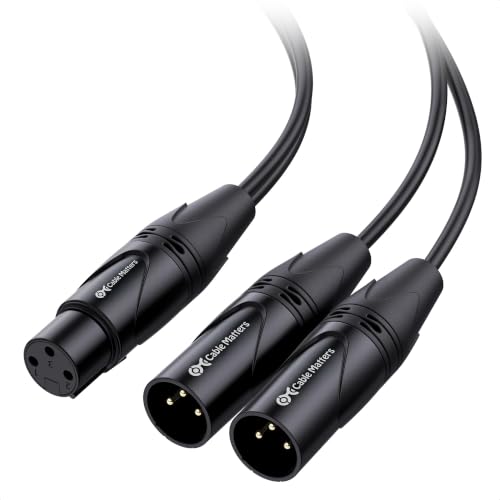
Best for: Sending one XLR output to two XLR inputs, such as routing a source to separate pieces of equipment. This cable has one female connector and two male connectors, with an 18-inch length and flexible PVC jacket.
Cable Matters describes it for standard three-pin XLR equipment, including microphones, mixers, and studio gear. Its listing also mentions routing a wireless microphone cable to two inputs. Confirm that the output and input arrangement in your system matches the cable’s connector genders before ordering.
Why it was selected: It covers the opposite direction from 2-female-to-1-male cables, which is important because “XLR 2 to 1” does not specify connector gender or signal direction.
Limitation: Splitting one output can change the load seen by the source. Check the equipment manuals or use an active distribution device when the source or destinations require isolation or buffering.
HUALEU Female-to-Dual-Male XLR Cable

Best for: Buyers who need one female XLR connection branching to two male XLR connections and value the included two-pack. Each cable is approximately two feet long, with the split positioned about one foot from the XLR port, according to the listing.
The product description lists 22 AWG oxygen-free copper conductors, aluminum foil and copper braid shielding, and silver-plated copper connectors. It is described for sending a mixer output to two power amplifiers or connecting a microphone output to two mixer inputs. Check the actual signal path and manufacturer guidance before using a passive splitter between multiple devices.
Why it was selected: It has the same connector arrangement as the Cable Matters female-to-dual-male model but lists two cables and provides specific construction and length details.
Limitation: A two-pack may be unnecessary if only one cable is needed. The listing’s claims about clear, noise-free performance should not be treated as a substitute for system-level compatibility checks.
Cable Matters Male-to-Dual-Female Splitter

Best for: Connecting two female-ended XLR cables to one male XLR connection. This 18-inch model has one male connector and two female connectors, so its gender arrangement differs from the female-to-dual-male cable listed above.
Cable Matters lists standard three-pin XLR connectors, a flexible PVC jacket, and oxygen-free copper conductors. The product is described for connecting two microphone cables to one XLR input and for other professional audio setups. Confirm whether your equipment needs a splitter or a proper mixer; the number of connectors alone does not establish that two sources can be combined.
Why it was selected: This option adds a distinct connector arrangement to the comparison and may suit buyers whose two cables end in female XLR connectors.
Limitation: The description uses broad bi-directional language, but the physical connector genders still determine how the cable can connect. It is not a mixing console or isolated distribution amplifier.
Buying Guide: How to Choose an XLR 2-to-1 Cable
What does “XLR 2-to-1” mean?
The phrase describes a Y-shaped cable with two connections on one side and one on the other, but it does not specify connector gender. A cable can have two female connectors and one male connector, one female connector and two male connectors, or one male connector and two female connectors. Match the actual connector genders to your devices, not just the “2-to-1” label.
Also identify what you are trying to do. Splitting one output to two destinations is different from combining two outputs into one input. Read the product’s connector layout and check the ports on both devices before choosing.
Are you splitting one output or combining two sources?
For one output feeding two inputs, a passive Y cable may be suitable in some systems, but it does not provide signal isolation or buffering. The two destinations may load the source differently. If the signal becomes weak or unstable, or if the equipment calls for isolation, use an appropriate distribution amplifier or other active device.
For two microphones or other active outputs feeding one input, do not assume a Y cable will mix them correctly. Directly joining outputs can cause interaction between devices, unwanted level changes, or other signal problems. A mixer or purpose-built summing device is generally the more appropriate way to combine separate audio sources.
Which connector genders should you check?
- Two female to one male: The two branches accept male XLR plugs, and the single male end connects to a compatible female input.
- One female to two male: The single female end accepts a male plug, while the two male branches connect to compatible female inputs.
- One male to two female: The single male end plugs into a female connection, and the two female branches accept male plugs.
These descriptions refer to the physical connectors. They do not, by themselves, confirm whether the signal direction or electrical application is suitable for your particular equipment.
Does cable length matter?
Short Y cables can reduce slack in a crowded rack or desk setup. The products here range from about one foot to two feet, with Cable Matters models listed at 18 inches. Measure the distance between the branch point and the devices, and leave enough slack to avoid pulling on connectors. For a longer run, use suitable XLR cables with the splitter rather than stretching a short adapter across a room.
What should you know about balanced audio and shielding?
Standard three-pin XLR connections are commonly used for balanced audio, but a splitter cable does not automatically make an unbalanced device balanced or solve every noise issue. Product listings mention features such as oxygen-free copper, foil shielding, braid shielding, and metal connector shells. These are construction details, not proof that a cable will remove hum caused by grounding, wiring, or equipment problems.
Check phantom power and equipment instructions
If your setup uses phantom power, consult the microphones, mixer, and splitter documentation before connecting or changing the signal path. The supplied product details do not establish how every cable behaves with every phantom-powered configuration. Turn equipment off or follow its connection procedure when making changes, especially when connecting microphones and powered audio gear.
What is the simplest way to compare options?
| Buyer need | What to verify |
|---|---|
| One output to two inputs | One-to-two connector gender, destination input requirements, and whether passive splitting is suitable |
| Two cables to one connection | Two-to-one connector gender and whether the signals should be combined or merely routed |
| Compact setup | Listed cable length and location of the Y branch |
| Potentially noisy environment | Equipment grounding, cable routing, and stated shielding construction |
| Multiple microphones into one channel | Use a mixer or suitable summing equipment rather than assuming a passive Y cable mixes signals |
Frequently Asked Questions
Can an XLR Y cable combine two microphones into one input?
Not reliably as a general-purpose solution. A passive Y cable directly joining two active outputs does not provide proper mixing or isolation. Use a mixer or purpose-built summing device for separate microphone signals.
Can one XLR output feed two devices?
Sometimes, depending on the source and destination inputs. A passive splitter does not buffer or isolate the signal, so check the equipment documentation and use an active distribution device if the system requires it.
How do I know which connector arrangement to buy?
Check the XLR ports on both ends of your intended connection. Compare their physical genders with the product’s stated layout, such as two female to one male or one female to two male.
Are these cables mixers?
No. They are passive cable adapters. They do not provide channel controls, independent gain adjustment, or the same signal management as a mixer.
Will an XLR splitter remove hum or noise?
Not necessarily. Shielding may help reduce some interference, but hum can also come from grounding, equipment, or cable routing. A splitter alone cannot correct every noise source.