
Best XLR Microphone Audio Interfaces for Home Studios and Podcasters
The best options combine clean preamps, low latency, and flexible inputs for a range of recording needs. This guide highlights five stand-out USB audio interfaces ideal for XLR mics and instrument input, tailored for singers, podcasters, and keyboard players who want studio clarity without a full studio. The top picks emphasize reliable preamps, easy setup, and practical features like direct monitoring and Air/Studio modes. Below, find quick product summaries and a buying guide to help you decide which model fits your workflow and budget.
| Product | Best For | Key Benefit |
|---|---|---|
| Focusrite Scarlett Solo 3rd Gen | Singers & podcasters | Excellent preamps with Air mode for brighter capture |
| Focusrite Scarlett Solo 4th Gen | Songwriters on the go | Studio-grade sound with high dynamic range |
| XTUGA Q-12 | Casual home studios | Reliable dual inputs with low latency |
| M-AUDIO M-Track Duo | Multi-purpose setups | Two combo inputs and flexible monitoring |
| Synido USB C Audio Interface | Compact, USB-C setups | 2×2 with low latency monitoring |
Focusrite Scarlett Solo 3rd Gen USB-C Audio Interface

The Focusrite Scarlett Solo 3rd Gen is designed for solo performers and podcasters needing a straightforward, high-quality input path. It features a single XLR mic input with a high-headroom preamp and Gain Halo indicators to prevent clipping. Air mode adds brightness to vocals and acoustic instruments, helping recordings cut through a mix. This model is best for singers who want a compact interface with pro-sounding mic preamps and simple setup.
Best for: Vocals and spoken-word creators who value clean, transparent captures with a touch of presence from Air mode. Limitations: Only one mic input means it isn’t ideal for multiple simultaneous vocalists.
Focusrite Scarlett Solo 4th Gen USB-C Audio Interface

The Scarlett Solo 4th Gen expands on the classic Solo design with improved converters and a broader dynamic range. It maintains an easy two-input workflow with mic and guitar/instrument options, plus Air mode for vocal presence. This is a strong choice for songwriters and solo artists who need studio-grade sound in a compact package and USB-C connectivity for modern computers.
Best for: Songwriters and solo performers seeking higher dynamic range and a polished, studio-grade tone. Limitation: Still a single mic input, so duet setups require alternative routing or an additional interface.
XTUGA USB Audio Interface Q-12

The XTUGA Q-12 offers reliable dual inputs with 16-Bit/48kHz resolution, designed for everyday recording and streaming. It supports 48V phantom power for condenser mics and emphasizes low latency for smoother vocal tracking. It’s a practical choice for beginners or hobbyists who want plug-and-play simplicity and stable USB connectivity.
Best for: Beginners and casual home studios needing a straightforward two-input interface with low-latency performance. Limitation: At 16-bit/48kHz it doesn’t match higher-resolution interfaces for critical studio work.
M-AUDIO M-Track Duo USB Audio Interface
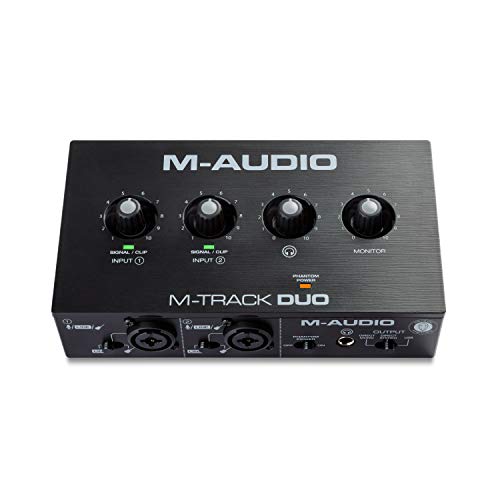
The M-AUDIO M-Track Duo provides versatile two-input operation with combo XLR/Line/Instrument inputs and phantom power. It supports 48kHz recording, offers a 1/4″ headphone output, and provides USB/direct monitoring for zero-latency playback. This model is well-suited for multi-genre home studios, podcasts with guests, and livestreamers who need flexible monitoring and routing.
Best for: Creators who need reliable two-input versatility and practical monitoring options. Limitation: The 48kHz cap may be limiting for some high-fidelity recording projects.
USB C Audio Interface For Recording Music, Synido 2×2

The Synido 2×2 USB-C interface emphasizes high-fidelity sound with 24-bit/48kHz support and three monitoring modes. It offers straightforward XLR and 1/4″ monitoring controls and a compact, user-friendly design. This interface is best for creators who want a compact, modern USB-C device with flexible monitoring tailored to streaming, recording, and post-production workflows.
Best for: USB-C powered setups and users needing flexible monitoring modes. Limitation: 24-bit depth is supported, but some users may desire higher sample rates for advanced mastering tasks.
Buying Guide
What to consider before buying
- Number of inputs: If you record with more than one mic, choose an interface with at least two XLR inputs or the ability to expand later.
- Preamps and gain: Look for interface preamps with adequate headroom and a clear gain staging indicator to avoid clipping.
- Latency and monitoring: Direct monitoring helps you hear without noticeable delay. Check if zero-latency monitoring is available and how it’s wired.
- Connectivity: USB-C is common on newer models for power and data efficiency. Ensure compatibility with your computer’s ports.
- Converters and sample rate: Higher quality converters (e.g., 24-bit/192kHz) deliver better dynamic range and detail for critical tracks.
- Built-in features: Air mode, Direct Monitoring, and phantom power availability affect vocal and instrument recording flexibility.
How to choose by use case
- Voice-over or solo vocalists: Favor single-mic interfaces with clean preamps and Air/Presence modes for brighter voice.
- Home studios with guitar and keyboard: Look for at least two inputs with instrument DI gain and robust monitoring options.
- Podcasters with guests: Two inputs, reliable mic preamps, and low-latency monitoring help with clean conversations and edits.
- Mobility and desk setup: Compact units with USB-C power are ideal for laptops and small desks.
Recommended pairing tips
- Use a dynamic mic for noisy rooms and a condenser mic with phantom power when possible, but ensure proper gain staging.
- Calibrate your input gain so that loud passages don’t clip and quiet passages remain clear in your DAW.
- Enable air or presence features only when needed to avoid excessive brightness on bright-room recordings.
FAQ
- What is the difference between USB-C and USB-A audio interfaces? Answer: USB-C interfaces typically offer easier compatibility with modern computers and power delivery, while USB-A may require an adapter.
- Do I need two mic inputs for a podcast with guests? Answer: Yes, having two mic inputs helps capture each speaker clearly and allows independent gain control.
- Is 24-bit/192kHz necessary for home recording? Answer: It provides higher resolution and headroom for professional mastering, but many hobbyists are satisfied with 24-bit/48kHz or 96kHz for most projects.
- What is direct monitoring? Answer: Direct monitoring lets you hear inputs with near-zero latency, avoiding delay during recording.
- Should I upgrade from 16-bit to 24-bit? Answer: If your projects require greater dynamic range and nuance in loud passages, upgrading can improve overall capture quality.
- Can I use these interfaces with iOS devices? Answer: Some interfaces support iOS via USB-C or specific adapters; check compatibility before buy.