
Best XLR Stereo to Mono Adapters for Clean Studio Audio
When you need to convert or route stereo signals into a single mono path, an XLR Y-splitter or XLR splitter cable is your reliable ally. This guide highlights five top options that balance signal integrity with practical use, helping you choose the right adapter for live sound, recording studios, and broadcasting. Each product is evaluated for who it’s best for, potential limitations, and how it handles noise, interference, and channel merging. Suitable buyers include podcasters, small-to-midroom studios, live sound techs, and educators setting up simple mono feeds from stereo sources.
| Product | Best For | Why This Product Stands Out |
|---|---|---|
| Cable Matters Balanced XLR Splitter Cable, 1.5ft | Studio setups needing clean mono merge | Balanced signal, OFC conductors, flexible 1.5 ft |
| Cable Matters XLR Splitter Cable, Female to 2X Male, 1.5ft | Professional mic-to-two-input routing | Bi-directional use, two outputs from one input |
| Hosa YXF-119 Y Cable, 6 Inches | Compact live or desktop projects | Ultra-compact, simple two-to-one mono merge |
| Disino XLR Splitter Cable, 10 Feet | Long cable runs with two-mono outputs | Nickel-plated connectors, two-mono split near ends |
| Disino XLR Female to Dual 1/4 Inch Y Splitter | Microphone to two 1/4″ inputs | Versatile with 1/4″ compatibility, dual mono outputs |
Cable Matters Balanced XLR Splitter Cable, 1.5ft

Best for studio environments requiring a clean mono feed from two mics into a single XLR input. This pro-grade XLR Y splitter supports one male to two female connections, ideal for merging stereo mic signals or routing two mics into a mono channel on a mixer. OFC conductors help minimize interference, delivering clearer audio with reduced noise. Use this where a balanced path and low-noise performance matter most.
Who it’s for: solo engineers, small studios, and field technicians needing reliable mono merging without sacrificing signal integrity. Limitation: primarily suited for balanced mic-level signals; ensure your gear supports balanced XLR inputs.
Cable Matters XLR Splitter Cable, 2M to 1M, 1.5ft
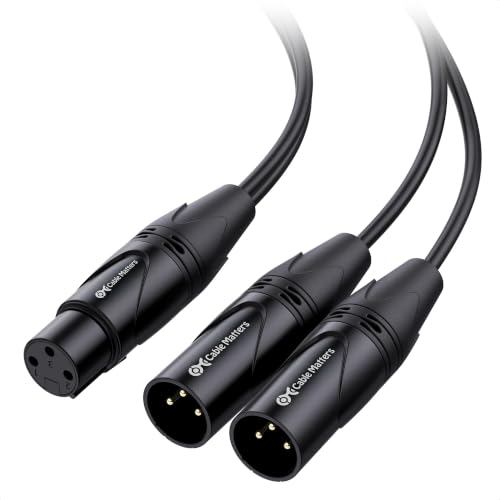
Best for live setups or studio connections that require splitting one XLR source into two outputs. The cable supports 2 male to 1 female configuration and provides a straightforward path to route a single mic or instrument into two inputs, such as a mixer and an audio interface. It’s a flexible choice for expanding input options while maintaining balanced signal quality.
Who it’s for: performers needing a simple dual-output route from one mic, or engineers preparing to feed two destinations. Caution: ensure the two outputs do not create phase-related issues with certain dynamic mics or DI boxes.
Hosa YXF-119 Y Cable, 6 Inches

Best for compact desks and tight setups where space is at a premium. This six-inch Y cable blends two XLR inputs into one output, ideal for quick mono merges on stage or in a small studio. Its short length reduces clutter, but requires careful placement to avoid tension on connectors.
Who it’s for: bedroom or small studio setups needing a tiny, unobtrusive mono merge. Limitation: very short length may limit flexibility in routing cables around other gear.
Disino XLR Splitter Cable, 10 Feet

Best for longer cable runs where two mono outputs are required from a single XLR source. This professional series Y splitter uses nickel-plated connectors and multiple shielding layers to minimize electromagnetic interference, helping preserve signal quality over longer distances. It splits near the ends, keeping the two outputs clean and separated.
Who it’s for: performers, recording engineers, and venues needing reliable mono splitting across longer distances. Caution: designed to split mono into two mono signals; it does not combine two signals into stereo.
Disino XLR Female to Dual 1/4 Inch Y Splitter

Best for connecting microphones to two mono 1/4″ inputs, such as two channels on a mixer or two recording devices. It converts an XLR output to two 1/4″ inputs, providing flexibility when your gear uses TS jacks. It uses 24k gold-plated connectors for corrosion resistance and improved signal integrity.
Who it’s for: users with cameras or gear that require 1/4″ inputs while preserving mono signal integrity. Limitation: 1/4″ outputs are unbalanced; consider potential hum if long runs or high-gain stages are involved.
Buying Guide: How To Choose The Right XLR Stereo-To-Mono Cable
Signal Path and Goal: Determine whether you need to merge two mics into one mono input or split a single mono source into two destinations. The right cable path depends on your mixer, interface, and stage layout.
Connection Type and Compatibility: Check if your gear uses 3-pin XLR connections, 1/4″ TS inputs, or both. Balanced XLR paths reduce noise, while unbalanced paths (XLR to 1/4″) may be more susceptible to hum over long runs.
Length And Flexibility: Short cables (6–18 inches) are ideal for tight workstations, while 3–10 ft runs work for on-stage layouts and studio desks. Select a length that minimizes clutter without forcing tension on connectors.
Shielding And Conductors: Look for OFC copper conductors and multi-layer shielding to minimize RF interference and noise. Nickel-plated or gold-plated connectors help resist corrosion and maintain reliable contact.
Bi-Directional Use: Some cables support either splitting a signal into two outputs or merging two inputs into one, which adds versatility in dynamic scenarios. Confirm the directionality that best fits your setup.
Practical Limitations: Some cables are designed to split mono into two mono outputs only or merge stereo to mono strictly in one direction. Avoid cables that claim stereo-to-mono conversion if your need is strictly merging two mics into a single channel on a mixer.
FAQ: Quick Answers For Buyers
- Do XLR splitters affect audio quality? High-quality cables with balanced designs and OFC conductors minimize noise and preserve signal integrity, but very long runs can introduce losses in some configurations.
- What’s the difference between splitting and merging? Splitting takes one source to two destinations; merging combines two sources into a single destination. Buy accordingly for your signal path.
- Is a balanced XLR path better for mono conversion? Yes, balanced paths with proper shielding reduce interference, making mono conversions cleaner in noisy environments.
- Can I use XLR to 1/4″ cables for mono merging? They work in many setups but are unbalanced and more prone to hum on longer runs. Use where distance and noise are manageable.
- What length should I choose? Choose the shortest length that comfortably fits your studio or stage layout to minimize clutter and potential interference.
- Are these cables suitable for professional broadcasting? Yes, many products listed are designed for studio and stage use, but Always align with your broadcasting gear’s input requirements.