Best Audiophile Linear Power Supplies for Quiet, Clean Audio
Answering the question “which linear power supply best suits my audio system?” this guide highlights five purpose-built options designed to reduce noise, lower ripple, and stabilize voltage for DACs, streamers, and preamps. Each pick prioritizes ultra-low noise and clean transient response, with clear notes on ideal use cases, limits, and compatibility considerations. This overview helps buyers compare top candidates for dedicated audio setups, desktop HiFi rigs, and networked streamers seeking a darker background and more precise detail retrieval.
| Product | ||
|---|---|---|
| DoukAudio D2 Linear Power Supply (Nobsound) | DACs, preamps, and streamers needing dual outputs | Ultra-low ripple with dual-output flexibility |
| Topping P50 Linear Power Supply | DACs and hi‑fi devices requiring low noise | Toroidal transformer and EMC/noise suppression |
| Super-PSU Linear Power Supply (FLYINSKY) | High-current analog circuits and sensitive HiFi gear | Discrete regulator design with very low output noise |
| iFi iPower X | Turntables, DACs, streamers, and AV gear | Active noise cancellation for a silent background |
| iFi iPower2 | Broad compatibility for audio and video devices | Multiple adapters and true noise suppression |
DoukAudio D2 Linear Power Supply

The DoukAudio D2 from Nobsound targets audio enthusiasts who need cleaner power for DACs, preamps, and streamers. Its dual-output design supports USB and DC or dual DC ports sharing current management to stabilize operation. The ultra-low ripple design aims for microvolt-level suppression, aiding quieter backgrounds and smoother treble. Best for small desktop HiFi setups that power multiple devices from a single supply.
Who it’s best for: a compact audio desk system with a DAC and USB audio dongle or streamer that benefits from shared current management and reduced noise. Why chosen: it directly addresses ripple and noise with a simple dual-output approach, enabling cleaner signal paths without extra adapters. Caution: check device power requirements to ensure the shared current design covers both outputs during peak demand.
Topping P50 Linear Power Supply

The Topping P50 focuses on low-noise performance with a sealed toroidal transformer designed to suppress EMC and other noise sources. It’s marketed as a compatible partner for various D/A converters, especially the D50 series and DX3 Pro+, with global voltage support (115V/230V). Best for hi-fi rigs that require robust, steady power with strong EMI suppression. Caution: its strength is in low noise generation; ensure your setup benefits from a dedicated PSU rather than relying on wall-wart solutions.
Super-PSU Linear Power Supply (FLYINSKY)

This desktop adapter from FLYINSKY emphasizes a fully discrete, linear regulator topology with ultra-low noise—stated output noise under 13 µV at max voltage. It’s designed for high-precision instrumentation and audio circuits that demand stable, clean DC with low impedance and fast transient response. Best for users needing a single high-output supply for dense analog/digital front-ends. Caution: high current and voltage variants may require careful integration to avoid grounding issues in complex rigs.
iFi iPower X

The iPower X is positioned as a low-noise DC adaptor engineered to improve clarity for iFi products and other devices needing a silent supply. It targets a broad range of components, including turntables, DACs, streamers, and routers. Its claim to fame is reducing electrical noise introduced by common wall warts and plugs, translating to a steadier current. Best for users seeking a plug-and-play upgrade with proven, straightforward noise reduction. Caution: real-world gains depend on the device’s sensitivity to power noise.
iFi iPower2
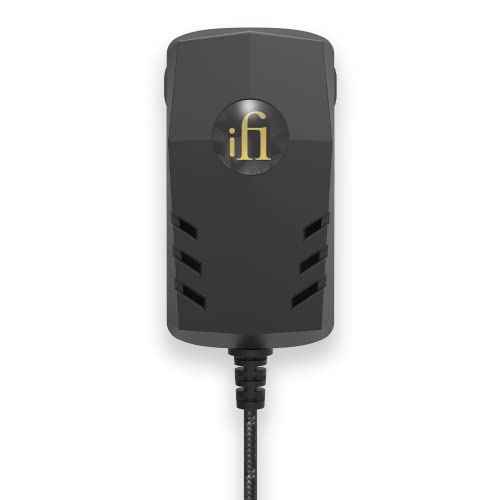
The iPower2 expands on iFi’s noise-suppressing approach by offering multiple voltage adapters and a dedicated 12V output configuration suitable for many audio devices. It includes four DC barrel adapters, a polarity adapter, and a right-angle option for tighter installations. Best for versatile setups where a single PSU can power several components with minimal noise. Caution: verify polarity and connector compatibility with your equipment before purchase.
Buying Guide
Key considerations when selecting a linear power supply for audio:
- Output voltage and current: Ensure the PSU provides the correct voltage(s) and enough current for all connected devices without sag.
- Noise and ripple: Look for microvolt-level ripple specs and multi-stage filtering (CLC, LDO, or toroidal transformers) to minimize background noise.
- Isolation and grounding: True isolation reduces ground loop hum and interference; consider units with isolated transformers or separate outputs for different devices.
- Output configuration: Dual outputs or selectable voltages offer flexibility for multi-device setups such as a DAC plus streamer.
- Size, heat, and acoustics: Desktop PSUs should stay cool and quiet, especially in near-field listening environments.
- Compatibility: Check voltage compatibility (115V/230V) and connector types to match your gear (USB vs. DC barrel jacks).
- Upgrade path: If your system evolves, a PSU with flexible outputs and adapters can simplify future upgrades.
Practical purchase questions
- Do I need a dual-output power supply for my DAC and streamer? If yes, prioritize models with two regulated outputs.
- Is transformer size important? Larger toroidal transformers often provide better low-noise performance, but may be bulkier and pricier.
- Will a quieter background improve perceived audio quality? Yes, a darker background typically reveals more micro-details and smoother transients.
- Should I buy a universal voltage PSU? Useful if you travel or power components in regions with different mains standards, but confirm your device compatibility.
FAQ
- What is “ultra-low ripple” and why does it matter for audio? It reduces fluctuations in the DC supply, helping to minimize noise in sensitive analog circuits and improving signal clarity.
- Can a linear PSU improve streaming quality? Yes, particularly for DACs and network devices that are sensitive to power noise and fluctuations.
- Are dual-output PSUs always better? Not always; they are advantageous when you need to power two devices with stable, independently regulated supplies.
- Do these PSUs work with all regions? Many offer global voltage configurations; verify the correct input rating and plug type for your region.
- Is there a risk of incompatibility with my gear? Some devices have very specific power needs; always confirm voltage, current, and connector compatibility before purchase.