
Best Chorus Flanger Phaser in One Pedal for Guitarists
The best all-in-one modulation pedals combine chorus, flanger, and phaser with other effects to simplify a crowded pedalboard. This guide highlights five reliable options that deliver classic textures and modern controls. Ideal buyers include players seeking versatile, space-saving solutions for live performance, studio work, or practice rigs without buying multiple pedals.
Overview of top picks:
| Product | Best For | Key Benefit |
|---|---|---|
| FLAMMA FC05 | All-around players | 11 modulation types in one compact shell |
| SONICAKE 4-Mode | Budget-minded players | Four classic modulations with Tap Tempo |
| JOYO Vision R-09 | Two-channel versatility | Dual-channel modulation with independent routing |
| AITONE AT-03 | All-in-one beginners | 11 effects with clear Serial/Parallel modes |
| Donner Mod Square II | Budget studio/stage players | 16 effects for broad tonal options |
FLAMMA FC05 Modulation Pedal Overview
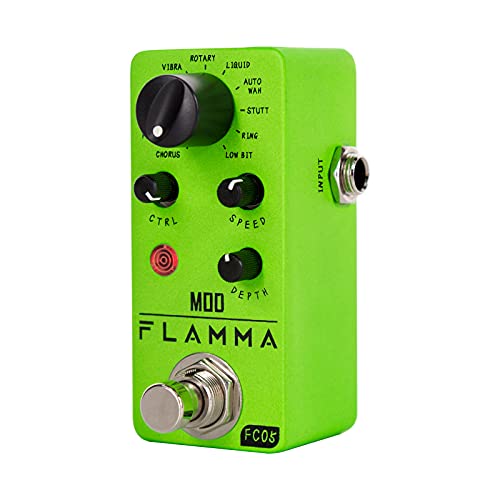
The FLAMMA FC05 offers 11 modulation effects in a single pedal, including Chorus, Flanger, Tremolo, Phaser, Vibrato, Rotary, Liquid, Auto Wah, Stutter, Ring, and Low Bit. This makes it suitable for players who want a broad palette from a compact unit. The full metal shell increases durability for gigging players, while its small footprint helps keep pedalboards tidy. Best for players who want a wide range of classic and experimental textures without adding multiple pedals.
Best for: players who prioritize a comprehensive modulation toolkit in one affordable unit. Why selected: its dense effect list covers most common and creative modulation needs, reducing rig complexity. Limitation: the wide set of options can require time to dial in ideal presets for live use.
SONICAKE Modulation Pedal 4-Mode

This SONICAKE unit provides 4 modulation modes—Chorus, Flanger, Phaser, and Tremolo—based on classic equipment tones. Tap Tempo lets you lock the rate to the music in real time, making it strong for players who perform with consistent tempos or seek synchronized effects in both studio and live settings. Its simplified layout favors quick tone-shaping without menu diving.
Best for: players who want a straightforward, affordable modulation pedal with tempo-synced control. Why selected: it reproduces classic chorus, flanger, phaser, and tremolo efficiently in one compact box. Limitation: it has fewer modes than some multi-effects units, which may curb experimental textures.
JOYO Vision R-09 Dual-Channel Modulation

The JOYO Vision R-09 bundles 18 modulation effects across two independent channels. Each channel offers a separate set of controls and a Tap Tempo function to align modulation to tempo. Channel A focuses on classic Mod-Phaser, Chorus, Flanger, and Rotary, while Channel B adds lo-fi and more experimental options. This dual-channel approach enables advanced routing, including Series or Parallel configurations for complex textures.
Best for: players needing stereo, programmable modulation with independent channels. Why selected: the dual-channel design supports richer stereo imaging and flexible signal flow. Limitation: the unit can be more complex to dial in for newcomers and may require a stable power setup for clean headroom.
AITONE AT-03 Modulation Pedal

The AITONE AT-03 packs 11 modulation effects, including Chorus, Flanger, Tremolo, Phaser, Vibrato, Rotary, Liquid, Auto Wah, Stutter, Ring, and Low Bit. It supports Serial and Parallel modes, clearly indicated by color. The Speed, Depth, and CTRL controls allow precise tone shaping. Best for: players seeking an approachable, all-in-one unit with straightforward mode switching. Limitation: the interface relies on a mode indicator; specific nuances may take practice to master in performance contexts.
Donner Mod Square II Modulation Pedal

The Donner Mod Square II offers 16 modulation modes, including chorus, flanger, phaser, tremolo, rotary, and more. It emphasizes versatility with a set of classic and experimental textures, suitable for players who want a wide tonal palette from a budget-friendly device. Best for: home studios or small gigs where a broad range of sounds is beneficial. Limitation: the feature set is broad, which may require time to dial in ideal tones across contexts.
Buying Guide: Key Considerations
- Modulation range: If you primarily need chorus, flanger, and phaser in one unit, prioritize pedals marketed as “11 modes” or “4 modes” that explicitly include those effects.
- Controls and layout: Look for clear Speed/Rate, Depth, and Level/CTRL knobs. Serial vs. parallel routing matters for how effects interact and how you blend textures.
- Power and reliability: Durable enclosures and stable power supply help avoid tone loss during performances.
- Mono vs. stereo: Dual-channel options support richer stereo imaging but add complexity; choose based on your live rig needs.
- Tempo features: Tap Tempo is valuable for syncing modulation to tempo in both live and studio contexts.
- Ease of use: Beginners may prefer simpler two-to-four mode pedals, while advanced players may want deeper editing capabilities.
- Size and weight: If space is a concern, compact units with many effects can reduce pedalboard clutter.
Frequently Asked Questions
- What is a modulation pedal and why would I want one pedal for chorus, flanger, and phaser?
- Is Tap Tempo important for modulation pedals?
- Should I choose a dual-channel or a single-channel pedal?
- What should I look for in a beginner-friendly modulation pedal?
- Do more effects mean better tones?
- Are there any caveats with budget modulation pedals?
Modulation pedals alter a guitar signal in time-based ways. A single pedal that includes chorus, flanger, and phaser provides quick access to multiple classic textures without extra pedals, saving space and simplifying setup.
Tap Tempo aligns the modulation rate to your playing pace or song tempo, ensuring rhythmic consistency across sections and live performances.
Dual-channel pedals are beneficial for stereo setups and independent texture layering. Single-channel units are simpler and often more affordable for beginners.
Look for clear mode labels, intuitive knob layout, a manageable number of effects, and reliable build quality. Serial/Parallel indicators are a plus for quick setup.
More effects offer broader tonal possibilities, but they can complicate the signal path. Choose a unit whose effects you will actually use and can dial in confidently.
Budget units may have limited build quality, noisier circuitry, or less consistent power requirements. They can still be excellent value if their core sounds meet your needs.