
Best Floor Standing Speaker Bases for Clear, Even Listening
Floor standing speaker bases help position your speakers for optimal sound at ear level, reduce unwanted vibration, and keep cables tidy. This guide highlights five solid options that suit a variety of setups—from compact bookshelves to studio monitors. The top picks are best for small to medium rooms, home theater, and desk-to-floor transitions. Each product is evaluated for stability, height adjustability, compatibility, and cable management to help you choose the right stand for your system.
| Product | Height Range | Weight Capacity | Base Type |
|---|---|---|---|
| PERLESMITH PSSS2 | 33.3″–45.1″ | Up to 11 lbs per speaker | Plastic/steel tube with cable holes |
| PEGZONE Pair Stands | 30.1″ | Up to 55 lbs per pair | Tempered glass base |
| Vondynote Pair | 32.6″–50.9″ | Up to 88 lbs per pair | Metal base with wide top plate |
| ELIVED Pair Stands | 31″ fixed | Up to 22 lbs per stand | 11.8″ glass base |
| ynVISION.DESIGN Stands | ~30.75″ | Up to 22 lbs per stand | Wood top with metal column |
PERLESMITH Universal Speaker Stands PSSS2

Best for small bookshelf and satellite speakers up to 11 lbs. This stand features an adjustable width from 4.5″ to 9″ and a height range of 33.3″ to 45″ for precise ear-level positioning. The twist-lock design allows tool-free height changes, aiding quick room adjustments. Cable routing is supported by a 1.18″ high and 0.59″ wide hole in the hollow poles, with hook-and-loop straps included for larger connectors. Best for compact rooms where clean aesthetics and simple setup matter.
- Best for compact bookshelf or satellite speakers under 11 lbs.
- Better for quick height tweaks without tools.
- Limitations: Not suitable for round or irregularly shaped speakers.
Speaker Stands PEGZONE Pair 30″ With Glass Base
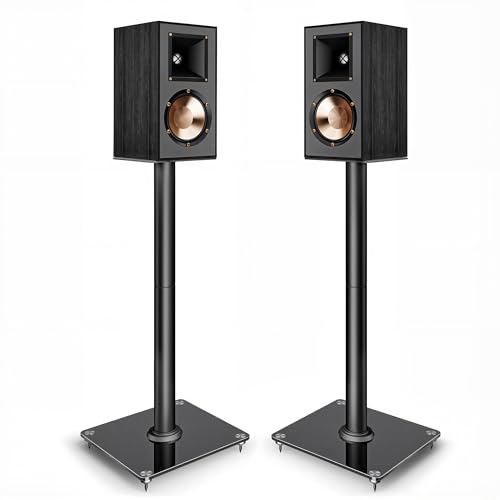
Better for a polished living room look with robust load-bearing capacity. Each stand supports up to 55 lbs and uses an 11.8″ x 11.8″ tempered glass base for stability. Internal cable management keeps wires hidden, delivering a clean aesthetic. Height is fixed at 30.1 inches, positioning speakers at typical seated ear level. A strong choice for higher-end bookshelf speakers and home theater setups where appearance and stability are priorities.
- Best for stability and elegance with heavier bookshelf speakers.
- Choose this if you want hidden cables and a clean look.
- Limitation: Fixed height; not ideal if you need adjustable listening height.
Vondynote Pair Studio Monitor Stands

Best for studio-grade setups needing tall, adjustable monitors. With a 32.6″–50.9″ height range and a wide 17.3″ triangular base, these stands provide strong support for heavier speakers up to 88 lbs per pair. A 9″ x 9″ top plate supports a wide range of monitor shapes, with a 2mm foam damping pad to reduce vibration. Locking knob and safety pin add reliability. Choose these when precise monitoring height and vibration control are paramount.
- Best for heavier studio monitors and serious listening rooms.
- Better for tall listening positions and vibration control.
- Limitation: Larger base footprint may occupy more floor space.
ELIVED Pair Speaker Stands With Glass Bases

Best for versatile compatibility with a variety of bookshelf speakers and rooms. Each stand supports up to 22 lbs and uses an 11.8″ glass base with two foot-pad options (metal or rubber) to protect delicate floors. The design emphasizes minimizing vibration for clearer sound and elevating speakers to ear level. This is a flexible option for mixed setups and carpeted floors where a soft-foot approach matters.
- Best for flexible compatibility and floor protection.
- Choose this if you want a combination of metal and glass aesthetics.
- Limitation: Lower weight capacity than some glass-based competitors.
Liquid Stands Studio Monitor Isolation Pads

Best for improving listening position and reducing vibration transmission. These foam pads provide angled mounting (0°, -5°, 10°, -10°, 5°) to tailor acoustics and are made from dense foam for stability. They help isolate monitors and can be used with existing stands or surfaces, offering a budget-friendly way to improve sound clarity in smaller studios or desks.
- Best for budget-conscious isolation and angling needs.
- Better for desk or stand setups needing quick vibration control.
- Limitation: Not a full stand; requires compatible mounting or surface.
Preffair Stainless Steel Speaker Spike Pads Mats
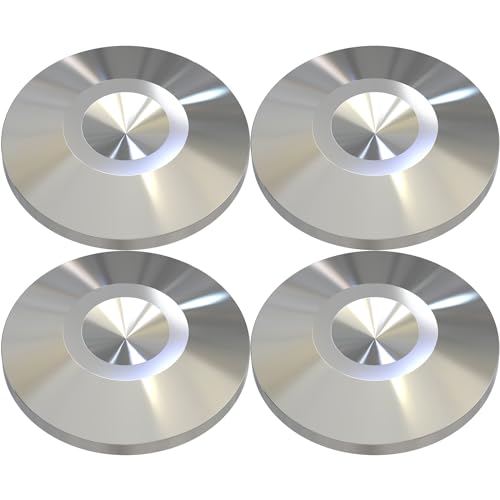
Best for isolating heavy speakers from floor resonances. These stainless steel spikes reduce vibration transfer and can improve bass clarity by decoupling from the floor. Made for HiFi setups, they provide a solid foundation for reducing energy transfer into soft floors. Use with compatible bases or spikes designed for speaker feet.
- Best for minimizing floor resonance in high-fidelity setups.
- Better for hard floor surfaces where spikes can bite firmly.
- Limitation: Not a full stand; requires compatible attachment points.
ynVISION.DESIGN Wood and Metal Stands

Best for a stylish yet sturdy option that blends wood and metal for warm acoustics and visual appeal. The stands support up to 22 lbs per stand, with a stable weighted base and a 30.75″ listening height that aims to place speakers at ear level for improved imaging and soundstage. Ideal for modern living rooms and home theaters where aesthetics matter as much as performance.
- Best for stylish, balanced home setups with mid-weight speakers.
- Choose this if you value a wood-top design and stable construction.
- Limitation: Moderate weight capacity; not ideal for very heavy monitors.
Buying Guide
Key considerations when choosing floor standing speaker bases include height adjustability, load capacity, base stability, and cable management. Evaluate each option against your room size, speaker weight, and listening position to optimize acoustics.
- Height and listening position: Taller stands place speakers at ear level for seated listening. If you sit, aim for adjustable heights; if you stand while listening, fixed mid-range heights may suffice.
- Weight capacity: Match the stand’s weight limit to your speaker’s weight. Underestimating can compromise stability and sound quality.
- Base design: Glass bases look sleek but can be sensitive to vibration; wider bases improve stability on soft flooring. Metal and wood bases provide rugged support with different aesthetic appeals.
- Cable management: Choose stands with hidden routing or accessible holes for tidy cables. This improves aesthetics and minimizes cable-induced noise if cables rub against the stand.
- Speaker compatibility: Ensure the top plate and mounting pattern fit your speaker’s footprint. Some stands are listed as compatible with specific brands or shapes; confirm fit for irregular shapes.
- Floor impact: Consider carpet vs. hard floor and whether feet or pads are included to protect floors and reduce resonance.
Frequently Asked Questions
- Q: Do floor standing speaker bases require installation tools? A: Most adjustable stands use tool-free height adjustment or simple knobs. Some fixed-height stands require basic assembly, typically with included hardware.
- Q: Can I use these stands for wall-mounted speakers? A: These stands are designed for floor placement. Wall mounting is a different setup not covered by these products.
- Q: How do I know if a stand is compatible with irregular speaker shapes? A: Check the top plate dimensions and mounting patterns. If the stand lists compatibility with specific brands or shapes, verify your speaker’s mounting holes and footprint.
- Q: Is cable management essential for sound quality? A: While not always essential, tidy cables reduce accidental disconnections and can minimize noise pickup from loose cords, contributing to a cleaner setup.
- Q: What’s the best height for listening comfort? A: A common guideline is ear level when seated, but this depends on your seating height and room configuration. Adjustable stands offer the most flexibility.
- Q: Do glass bases affect stability on carpet? A: Glass bases are stable but can slide on thick carpet if not properly secured. Choose stands with grippy feet or additional anchoring options for carpeted floors.