
Best High End Active Speakers for Audiophiles and Home Studios
Answering the search intent: these high end active speakers deliver precise, powerful sound suitable for critical listening, home studios, and premium home theater setups. They’re best for audiophiles seeking accurate imaging, low distortion at high volumes, and easy setup. Top picks include near-field monitors and floor/desktop units with built‑in amplification. The following selections prioritize clarity, build quality, and connectivity.
Product Snapshot
| Product | Key Strength | Best For |
|---|---|---|
| Edifier S1000MKII | Hi‑res capable, class D amp, Bluetooth | Audiophile-grade desktop listening |
| Yamaha DBR 12 | 12″ powered cabinet, high output | Small to medium rooms, stage monitor use |
| Edifier R1700BTs | 66W RMS, Bluetooth aptX HD, sub out | Versatile living room and studio near-field |
| Edifier R1280DBs | 42W RMS, optical/coax inputs, sub out | Smart connectivity with warm, controlled sound |
| Edifier MR3 | Hi‑Res certified, multi‑input | Compact, accurate monitoring on a budget |
Edifier S1000MKII Audiophile Active Bookshelf Speakers
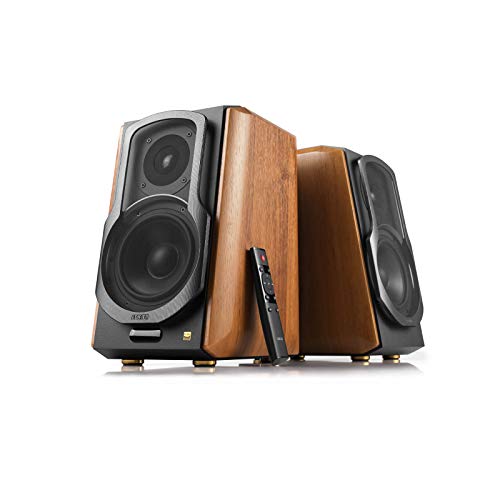
Edifier’s S1000MKII is designed for users who demand high fidelity in a bookshelf form factor. The system combines a built‑in 60W x 2 Class D amplifier with a Frequency Response of 45 Hz to 40 kHz and Bluetooth 5.0 with aptX HD. This setup supports clear treble, detailed mids, and robust bass for near‑field listening or desk setups. Best for: audiophiles who want studio‑grade sound without needing an external amp, and those who value wireless streaming with high‑resolution codecs. Limitation: larger footprint than compact bookshelves, which may matter in tight desks.
Yamaha DBR Series DBR 12 Inch Powered Speaker Cabinet

The Yamaha DBR 12 is a 12″ powered speaker designed for main or monitor use in compact to mid‑sized rooms or small stages. It offers high output with dependable reliability and a built‑in amplifier, making it a practical choice for performers or home studios seeking a robust, clear, and consistent sound with low coloration. Best for: small venues, rehearsal spaces, and desktop monitoring where you need a loud, clean reference. Caution: heavier and bulkier than bookshelf options, requiring more space and setup planning.
Edifier R1700BTs Active Bluetooth Bookshelf Speakers
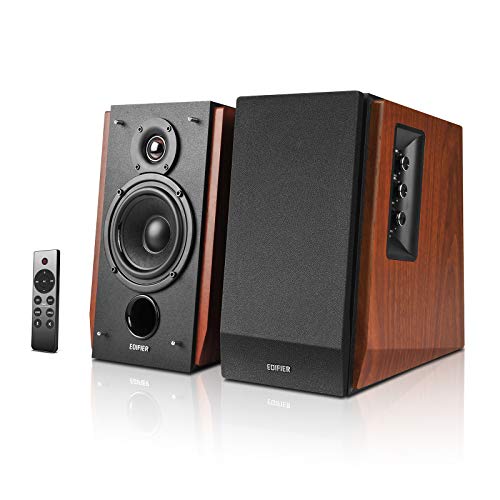
Edifier R1700BTs deliver 66W RMS with Bluetooth 5.0 and aptX HD, plus a dedicated subwoofer output for flexible bass extension. The combination of 19mm silk dome tweeters and 4″ woofers provides a balanced, natural sound across genres. Best for: users who want wireless listening with strong, clean midrange and meaningful bass without external amplification. Choose this if you prefer built‑in Bluetooth and versatility. Limitation: bass depth may be less pronounced in very large rooms without a powered sub.
Edifier R1280DBs Active Bluetooth Bookshelf Speakers
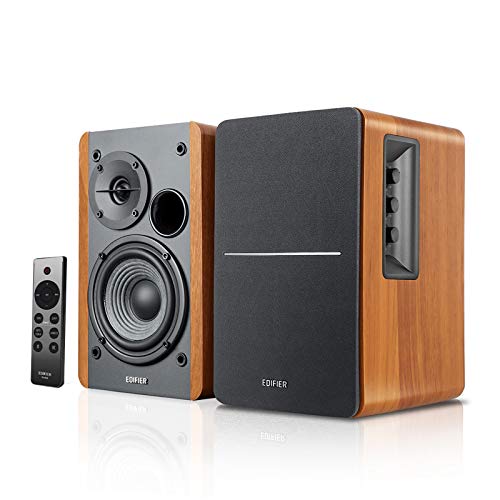
Edifier R1280DBs combines Bluetooth 5.0 wireless streaming with multiple inputs including optical and coax, plus a dedicated subwoofer out. Its 42W RMS provides clear, controlled sound with a 13mm silk dome tweeter and 4″ woofer for balanced response. Best for: multimedia setups where wireless ease and modern connections are important. Better for near‑field listening or desk setups rather than large rooms. Limitation: less bass authority in bigger spaces without sub amplification.
Edifier MR3 Powered Studio Monitor

Edifier MR3 is a compact, hi‑res certified active speaker with balanced TRS, RCA, and AUX inputs, plus Bluetooth with multi‑point connectivity. It uses 18W*2 RMS output and a 3.5″ mid‑low driver with a 1″ tweeter to deliver a detailed, flat monitoring response suitable for home studios and critical listening. Best for: near‑field monitoring in compact spaces, or as a secondary reference speaker. Caution: limited bass output compared to larger powered monitors; may require a sub for bass‑heavy mixes.
Buying Guide: How To Choose High End Active Speakers
- What is your primary use? For near‑field desk work, bookshelf monitors like the S1000MKII or MR3 are ideal. For room‑filling sound, consider a powered cabinet like the Yamaha DBR 12.
- Do you want wireless capability? If yes, prioritize Bluetooth models with aptX HD (for example, Edifier MR3 and R1700BTs) and ensure the inputs match your gear (optical, coax, USB, or RCA).
- What is your room size? Smaller rooms benefit from bookshelf formats; larger rooms benefit from higher wattage and larger woofers with proper room treatment and bass management.
- Is connectivity important? Optical/coax inputs and a dedicated subwoofer out provide future‑proofing for TVs and home theater setups.
- Do you need built‑in DSP features? Some models offer spatializers or room correction to improve imaging in imperfect rooms.
FAQ
- What defines “high end” in active speakers? High end generally means robust build quality, accurate frequency response, low distortion at higher volumes, and reliable amplification designed for near‑field or room listening.
- Are powered speakers easier to set up than passive ones? Yes. Powered speakers include the amp, reducing the number of components and cable complexity.
- Is Bluetooth audio quality enough for studio monitoring? Bluetooth is convenient but may introduce compression. For critical mixing, use wired inputs when possible and reserve Bluetooth for casual listening.
- How do I choose between bookshelf and floor‑standing active speakers? Bookshelf models are compact and ideal for desks; floor‑standing units provide greater bass extension and room filling sound, suitable for larger spaces.
- Should I pair these with a subwoofer? If you require strong low end for music genres or film, a subwoofer improves bass without overloading the mains. Ensure the sub out compatibility and crossover settings.
- What is a good starting wattage for near‑field listening? For near‑field desk setups, 30–60W per speaker is often sufficient; larger rooms or live setups may benefit from 70–100W or more per speaker.