
Best Portable Keyboards for Beginners: Easy, Compact Learning Pianos
Yes—these portable keyboards are ideal for beginners who want an affordable, compact entry into piano and keyboard playing. This guide highlights five beginner-friendly options and who they’re best for, with clear reasons to choose each one. The top picks balance portability, built-in learning features, and practical extras like teaching modes, microphones, and included stands. The buyer profiles below help you decide whether you’re shopping for a kid, student, or adult returning to piano.
| Product | Best For | Key Highlights |
|---|---|---|
| RockJam RJ361 61 Key Compact Keyboard Piano | Young beginners or space-conscious learners | 200 sounds, 200 rhythms; sustain and vibrato effects; record and playback |
| RockJam RJ5061 61 Key Keyboard Kit | Complete starter package buyers | Includes stand, bench, headphones, note stickers; LED panel; 200 rhythms and tones |
| RockJam RJ549 49 Key Keyboard Piano | Kids and home practice | Ready out of the box; note stickers; Simply Piano lessons guidance |
| JIKADA 61 Key Portable Keyboard | Tech-savvy learners needing teaching modes | Three teaching modes; LCD display; audio input/output; memory function |
| HERTMUN 61 Key Portable Keyboard | Portable practice with mic use | 100 sounds, 100 rhythms; built-in speakers; record feature; microphone jack |
RockJam RJ361 61 Key Compact Keyboard Piano
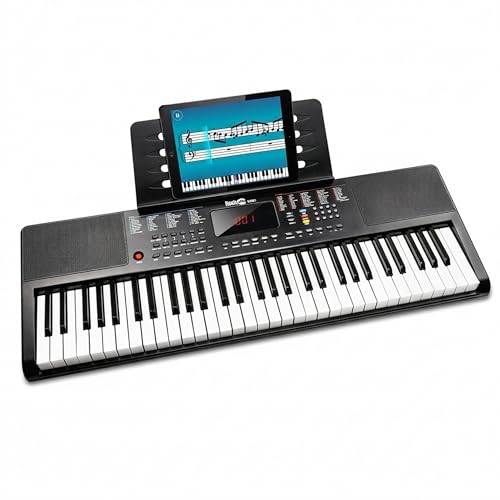
The RJ361 is a compact 61-key keyboard designed for beginners who need a space-saving option. Best for learners who want a budget-friendly device with a broad sound palette and built-in playback. The 200 sounds and 200 rhythms provide varied practice and creative possibilities, while sustain and vibrato effects help develop expressive playing. Record and playback let beginners review progress. A good fit for students or casual players who prioritize versatility and price over advanced features.
RockJam RJ5061 61 Key Keyboard Kit

The RJ5061 is a complete beginner package with stand, bench, headphones, and note stickers. It’s best for learners who want an all-in-one setup for home practice and structured learning. In addition to the 61 keys, it includes a pitch bend wheel and an LED panel with 200 rhythms and 200 tones, plus demo songs. It’s ideal for families or classrooms where a turnkey practice station helps users stay motivated and organized.
RockJam RJ549 49 Key Keyboard Piano

The RJ549 offers a compact 49-key option with immediate usability—perfect for kids or beginners learning at home. It ships ready out of the box and includes a sheet music stand. The keyboard also features keynote stickers and Simply Piano lessons guidance for step-by-step learning. It’s a practical choice for younger players or those who want a smaller keyboard for travel and desk use.
JIKADA 61 Key Portable Electronic Keyboard

The JIKADA 61-key keyboard emphasizes teaching with three modes and an LCD display. It provides 255 tones and rhythms, a memory function to save parameters, and a built-in microphone and headphone jack for late-night practice without disturbance. Best for learners who want guided progress and the option to play with vocals or accompaniment while practicing.
HERTMUN 61 Key Keyboard with Speakers

The HERTMUN model offers 100 sounds and 100 rhythms, with a built-in record feature and speakers for standalone use. It also supports microphone and headphone connections for silent or collaborative practice. It’s best for teens or adults who want a portable device with a broad sound set and simple operation, suitable for travel or classroom use.
Buying Guide: Key Considerations For Beginner Keyboard Shoppers
- Purpose and environment: Choose a model with a compact footprint if you have limited space, or a kit with stand and bench if you want a complete setup from day one.
- Key count and touch: 61 keys are common for beginners; 49 keys suit younger children or travel use. Semi-weighted keys provide a closer feel to acoustic pianos and may help with technique development.
- Learning features: Look for teaching modes, LCD displays, built-in songs, and lesson-style guidance, which support progressive learning and steady practice.
- Sound and rhythm library: A broad assortment of tones and rhythms expands practice options and keeps motivation high, especially for beginners exploring different styles.
- Connectivity: Microphone and headphone options support singing along and silent practice. USB/MIDI compatibility can help with future software learning tools.
- Accessories: Bundled stands, benches, sheets, and stickers can accelerate early progress and keep practice organized.
- Portability and power: Battery-powered options enable outdoor practice or travel; ensure the power supply is compatible with your locale.
FAQ
- What is the best beginner keyboard for small spaces?
The RockJam RJ361 is a strong choice due to its compact 61-key design and broad sound library, balancing space savings with learning features. - Should I buy a kit with stand and bench?
If you want a ready-to-use setup, a kit like the RJ5061 offers a complete package—stand, bench, headphones, and notes—helping keep everything organized. - Do beginner keyboards include teaching modes?
Many do, including the JIKADA model, which offers three teaching modes to guide beginners step by step and a display for easy reference. - Are 49-key keyboards suitable for beginners?
Yes, especially for younger players or tight spaces. The RJ549 is a good example, offering immediate practice with essential features. - Is microphone input important for beginners?
Microphone input is optional but helpful for practicing singing along or playing with vocal accompaniment without disturbing others, as found on several models listed. - What should I consider when upgrading later?
If you anticipate more advanced playing, consider a 61-key or 88-key model with more tones, improved key action, and MIDI/USB connectivity for software learning tools.