
Best Reverb Pedals for Synths: Rich Ambient Tones for Analog and Digital Keys
Answering the common buyer question: which reverb pedals deliver clear, expressive ambient space for synths and keyboard rigs? This guide highlights five options that pair well with synth tones, from compact mini pedals to feature-rich units. Best for pedalboard-slim setups, live rigs, studio synth textures, and players seeking analog-dry-through paths. The table below compares core details to help you decide quickly.
| Product | Best For | Key Feature | Power / Size |
|---|---|---|---|
| Mediorays Mini Reverb | Travel-ready rigs | Authentic spring reverb, aluminum case | USB/DC power; mini size |
| M-VAVE Mini Universe Pro | Multiple synth textures | 9 digital reverbs; dual power | Compact metal housing |
| Donner Reverb Verb Square | Live ambientes | 7 modes; true bypass | Aluminum alloy |
| FLAMMA FC02 Mini Reverb | Studio and stage | 3 reverbs: Studio, Church, Plate | True bypass; compact |
| SONICAKE Delay Reverb 2 in 1 | Hybrid echoes & ambiance | Delay + Plate reverb; tap tempo | Digital with 2000 ms delay |
Mediorays Mini Reverb Pedal

The Mediorays unit offers an authentic spring-like reverb with a true bypass path for clean synth signals. Its aluminum alloy chassis emphasizes durability, important for gigging synth players who travel with pedalboards. A bright LED indicator helps performers quickly confirm the pedal’s status on stage or in the studio. Best for players who want a compact, no-frills reverb with reliable, transparent tone.
Who it’s best for: keyboardists seeking a compact, sturdy reverb pedal with simple controls. Why selected: combines durable build with a straightforward spring-like reverb voice, suitable for adding subtle ambient space to synth leads. Caution: tiny footprint means fewer onboard tone sculpting options compared to larger units.
M-VAVE Mini Universe Pro
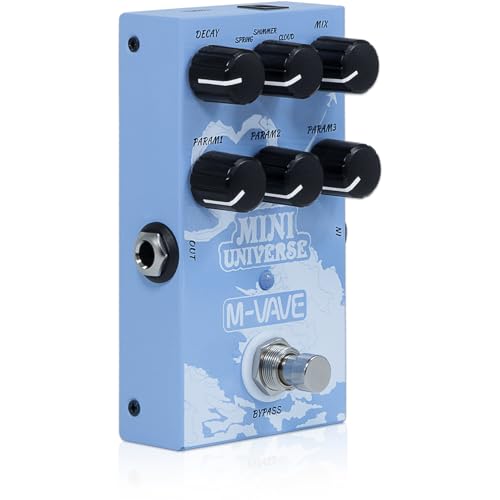
Offering nine reverberation tones, the Mini Universe Pro is a flexible choice for synth players seeking a wide palette—from Room and Hall to Shimmer and Lo-Fi. It supports multiple power options (USB-C or DC 9V) and emphasizes easy operation with an approachable interface. Best for: synthists who want a compact pedal with a broad tonal library and easy on-ramp to advanced textures.
Limitations: ensure compatible power setup before live use; some power methods require a Type-C supply for reliable performance.
Donner Reverb Verb Square

The Donner Verb Square packs seven modes (Room, Hall, Church, Spring, Plate, Studio, Mod) into a durable aluminum-alloy chassis with true bypass. It’s well suited for synth pads needing a broader sense of space or vintage-inspired textures. Best for players who want a budget-friendly, versatile reverb with a classic digital path that remains transparent when bypassed.
Best for: live or studio synth rigs requiring a broad mode set. Caution: fewer modern “shimmer” or ambient controls than some higher-end models.
FLAMMA FC02 Mini Reverb
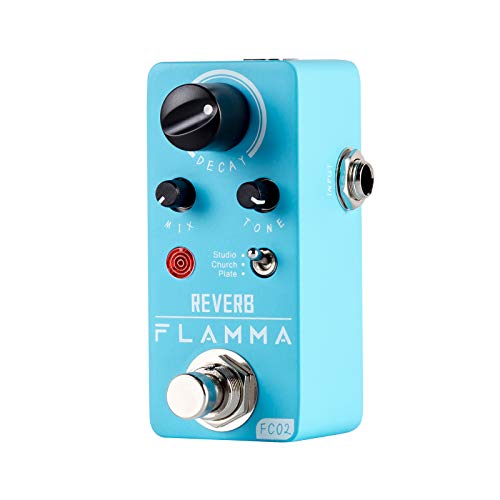
FLAMMA’s FC02 presents three reverb modes—Studio, Church, Plate—with true bypass for signal integrity when the pedal is off. The compact design makes it ideal for synth setups where space is at a premium. Best for players who want straightforward, three-voice reverb without extra knobs for quick on-the-fly tonal changes.
Limitation: tone-shaping is modest compared to more feature-rich units, so it’s best for straightforward ambient needs rather than deep studio experiments.
SONICAKE Delay Reverb 2 in 1

Dual-function: digital delay plus plate reverb, offering up to 2000 ms delay and a long, programmatic decay. This is a strong pick for synth players who want both echo and ambient reverb in a single pedal. It includes a trail and tap tempo, which aids live performance and dynamic sound shaping. Best for: players pursuing lush, chorus-like ambient textures with rhythmic delay elements.
Limitation: as a combined effect, some users may prefer separate, dedicated pedals for precise control over each parameter during complex gigs.
Buying Guide
What should you consider when choosing a reverb pedal for synths?
Sound character: Decide if you want vintage spring, lush plate, room, hall, or shimmer textures. Analog-voiced paths can preserve guitar-like brightness when played with synths. If you need pure, uncolored tone, look for true bypass and dry-through options.
Size, power, and workflow
Compact pedals fit smaller pedalboards; check power requirements (DC, USB-C, 9V). For synth rigs, a stable power setup is crucial to avoid hiss or inconsistent effects during long performances. Consider pedals with easy-to-read controls or presets for quick on-stage changes.
Onboard versatility vs. specialization
Nine reverbs or multiple modes provide broad tonal ranges (Room, Hall, Shimmer, etc.). If your synth work emphasizes evolving ambient pads or cinematic textures, a larger pedal with more parameters can be advantageous. For straightforward ambient accents, smaller, true-bypass units may be ideal.
Signal path and tone integrity
Analog dry-through paths help preserve your synth’s original tone, reducing perceived dullness after applying reverb. True bypass minimizes tone coloration when the pedal is off. If you frequently switch presets live, consider user-friendly interfaces with clear LED indicators and robust build quality.
Compatibility with synths and bass
Many reverb pedals support electric guitars but are equally suitable for synths and bass when paired with appropriate outputs. Check if a pedal’s impedance and input/output configuration suits your gear chain and ensures minimal tone loss. If you use pedals in a complex chain, prioritize pedals that maintain your core signal even with multiple effects engaged.
Frequently Asked Questions
Are mini reverb pedals good for synths? Yes. They’re compact, affordable, and often sufficient for adding space to synth textures; choose models with stable bypass and clear tone when used with keyboards.
Can reverb pedals replace a dedicated reverb in a rack system? They can complement or replace certain studio roles for smaller setups, but rack-mounted reverbs typically offer deeper parameter control and higher fidelity for professional studios.
Is true bypass important for synth players? Yes, it helps keep your synth signal uncolored when the pedal is off, preserving your original tone during performance.
What’s the difference between room, plate, and hall reverbs? Room simulates a small space with tight reflections, plate evokes a metallic, lush tail, and hall simulates a large space with long, airy decays. Your choice should align with the mood you want for your synth parts.
Should I use multiple reverbs with synths? In many cases, yes. One reverb can provide a subtle sense of space, while a second can add a broader, more cinematic ambience. Use an effects chain that keeps your signal clean and avoids crowding the mix.