
Best Reverb Units for Vocals: Clear, Professional Echo and Space for Singers
Answering the question “which reverb unit is best for vocals?” this guide highlights five solid options designed to help singers, podcasters, and live performers craft spacious, natural vocal sounds. Each pick is evaluated for ease of use, sound quality, and reliability in stage or studio settings. The top choices range from compact stompboxes to powerful multi-effect processors, making it easier to decide who each product fits best—whether you’re performing live, streaming, or recording at home.
| Product | Best For | Key Benefit |
|---|---|---|
| BOSS VE-1 | Vocalists seeking studio-like ambience | Seven ambience types with real-time control |
| AUDOTA AVE-100 | Podcasters and live streamers | Integrated pitch, harmony, and stage protection |
| FLAMMA FV01 | Singers and guitarists needing simple, vocal-focused effects | Dedicated vocal modes with natural reverb |
| Donner Reverb Guitar Pedal | Multiple classic reverb modes in a durable box | |
| M-VAVE Mini Universe Pro | Guitarists who want broad reverb textures | Nine reverb modes plus robust build |
BOSS VE-1 Vocal Echo

The VE-1 is designed to deliver professional vocal ambience with a compact footprint. It offers seven types of ambience effects with adjustable settings, making it ideal for performers who want real-time vibe control on stage or in a studio. Best for vocalists who prioritize a quick path to polished reverb and related effects without complex setup.
Best for: Singers who need accessible, studio-like reverb and ambience in a portable unit. Why selected: it combines quality effects with easy control in a single pedal for live use. Limitation: while versatile, it may not cover every advanced vocal effect scenario that larger multi-effect units offer.
AUDOTA AVE-100 Multi-Effect Vocal Processor

This processor emphasizes vocal integrity with multiple effects, including reverb, and an intelligent background feature set, including harmony and loop options. It is best for podcasters, live streamers, and performers who want integrated stage-friendly tools in one unit. Limitation: potential learning curve for users new to advanced vocal processing.
FLAMMA FV01 Vocal Effects Processor

The FV01 centers on vocal effects with three distinct tone modes (Warm, Bright, Normal) and built-in pitch correction. It provides a simple yet effective path to adding reverb and other vocal effects in live or recorded performances. Best for: vocalists who want straightforward editing with reliable vocal tone shaping. Limitation: pitch correction is basic and may not suit advanced studio production needs.
Donner Reverb Pedal Verb Square

The Donner pedal provides seven modes: Room, Hall, Church, Spring, Plate, Studio, and Mod, all in a compact aluminum-alloy chassis with true bypass. This makes it a strong choice for players who need classic and modern reverb textures in a durable small pedal. Best for: players who want a broad reverb palette on a budget. Limitation: as a guitar-oriented pedal, footswitch routing might require a vocal-specific setup in certain rigs.
M-VAVE Mini Universe Pro Reverb Pedal
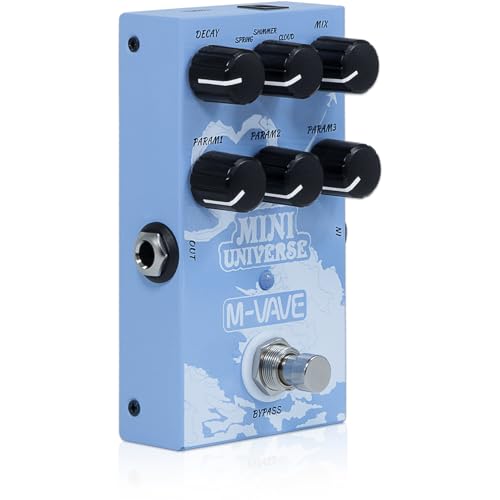
The Mini Universe Pro offers nine digital reverb tones across Room, Hall, Plate, Spring, Shimmer, Cloud, Bloom, Swell, and Lo-Fi. It supports dual power options and a robust metal housing, making it suitable for guitarists and bass players who want a broad, studio-like reverb palette in a compact form. Best for: players who value a wide reverb range and solid build. Limitation: more modes may require more careful dialing to avoid clashing with your vocal signal if used in voice-focused setups.
Buying Guide: Key Purchase Considerations
What kind of vocal work will you do? For live performances, prioritize units with real-time control, robust bypass, and clear tone shaping. For studio work, consider processors with advanced harmony, pitch correction, and high-quality algorithmic reverbs.
What input and output do you need? Check microphone compatibility, phantom power, and the ability to route vocal and instrument signals separately if desired. USB or audio interface compatibility can simplify home studios.
How portable should it be? If you perform on the go, compact pedals with sturdy enclosures and simple controls reduce setup time. For fixed studios, larger multi-effect units might offer deeper control without needing extra gear.
Ease of use vs. depth of control. Beginners benefit from intuitive layouts and presets, while advanced users may prefer units with editable parameters, MIDI control, and multiple effect chains.
Budget and durability. Aluminum or metal cases improve longevity on stage. Consider whether the price aligns with your expected use and performance environment.
FAQ
- What is a reverb unit for vocals? A reverb unit adds space, depth, and ambience to vocal signals, simulating acoustic environments such as rooms, halls, or plates.
- Do these devices require a separate audio interface? Not always. Some units offer USB or integrated interfaces, but many pedals route through an amp or mixer first.
- Is a dedicated vocal processor better than a guitar reverb pedal? It depends on needs. Vocal processors typically include harmony, key detection, and vocal-focused effects, while guitar reverb pedals emphasize guitar signal paths.
- Can I use chorus effects with reverb for vocals? Yes, many units provide chorus or pitch-based effects that blend with reverb for lush textures on vocals.
- Which option is best for beginners? A compact, easy-to-use unit like the BOSS VE-1 or FLAMMA FV01 is usually friendlier for beginners seeking quick results.
- Are multi-effect units worth it for home studios? If you need a single box for multiple vocal effects, harmony, and reverb, a multi-effect processor can simplify workflow and saving space.