
Best USB Audio Interfaces With 32-Bit Depth for Clear Recording
Answering the buyer’s search intent, these USB audio interfaces support 32-bit depth for high-fidelity capture and reliable performance. Ideal for home studios, podcasters, and musicians seeking clean recordings with minimal noise. The top picks below are best for different needs: compact travel setups, professional studio work, hobbyist projects, and live streaming. The table summarizes the five selected options and who they’re best for.
| Product | |
|---|---|
| Yamaha URX22C | Home studios needing durable 2×2 I/O with DSP effects |
| PIYONE Audio Interface (Q28) | Plug-and-play, Mac/PC users seeking USB-C, no drivers |
| BOMGE U202 | Compact setup with 32-bit/192kHz for podcasting and streaming |
| Solid State Logic 2 MKII Plus | Producers and podcasters needing robust I/O and high fidelity |
| PreSonus AudioBox 96 | Budget-friendly, portable two-channel recording |
Yamaha URX22C USB-C Audio/MIDI Interface

The Yamaha URX22C is a 2-in/2-out USB-C audio interface with 32-bit/192 kHz support. It provides two combo XLR/TRS inputs with Class-A D-PRE mic preamps, +48V phantom power, and one Hi-Z input. It also offers two TRS main outputs and a sturdy full-metal housing. This model is best for musicians or small studios needing integrated DSP-powered mixing and effects, plus reliable USB-C connectivity. A limitation is that detailed driver support may vary by OS; ensure compatibility before purchase.
PIYONE 2×2 USB-C Audio Interface (Q28)

PIYONE offers a 2-channel, 24-bit/192 kHz interface with USB-C and class-compliant operation. It emphasizes plug-and-play use without required drivers, suitable for Mac or PC setups and mobile recording. The design includes illuminated gain controls for visibility in dim studios. Best for users who want a simple, driver-free setup and portable operation. The caveat is that it relies on a single USB-C bus connection for power and data, which may limit bus-powered performance on some laptops.
BOMGE U202 USB Audio Interface

The BOMGE U202 provides two combo XLR/TS inputs with 32-bit/192 kHz conversion and phantom power on the mic input. It supports loopback for easy streaming and recording workflows, making it suitable for podcasters, streamers, and guitarists recording at home. A practical caution: driver compatibility and software beyond generic USB audio drivers can vary by OS, so check your DAW compatibility beforehand.
Solid State Logic 2 MKII Plus USB-C Interface
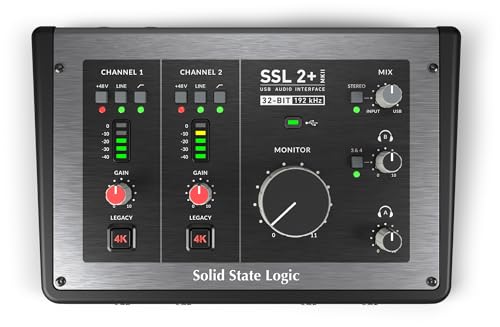
SSL’s 2 MKII Plus is a 2×4 USB-C interface designed for producers and podcasters who require high fidelity and flexible routing. It includes two XLR mic preamps and multiple outputs, with 32-bit/192 kHz AD/DA conversions and legacy 4K analog enhancement. This option is best for users seeking a more feature-rich, expandable interface in a compact format. A limitation is the higher price point compared with entry-level two-channel devices.
PreSonus AudioBox 96
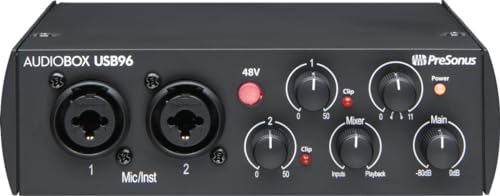
The PreSonus AudioBox 96 offers a budget-friendly two-channel USB interface with two Class-A mic preamps and instrument inputs, plus MIDI I/O. While it emphasizes portability and value, it remains capable for personal recording and basic multi-track projects. Best for students or hobbyists who need reliable USB audio without a steep price, though it may lack some advanced features found in higher-end models.
Buying Guide
What to consider when choosing a 32-bit depth USB audio interface
- Connection Type: If you primarily use laptops or mobile devices, USB-C models like URX22C and Q28 offer modern, plug-and-play convenience.
- Number of Preamps and I/O: Assess whether you need 2×2, 2×4, or more. Two preamps cover many home studio setups, while extra outputs support more monitoring options.
- Phantom Power: Condenser mics require 48V phantom power. Ensure the interface provides it on the mic inputs you’ll use.
- Latency and Monitoring: Look for direct monitoring, loopback, or DSP effects if you plan to monitor during recording or stream live.
- Bit Depth and Sample Rate: While 32-bit/192 kHz is ideal for clarity, ensure your DAW and project workflow support these specifications.
- Build and Portability: Metal enclosures tend to be more durable for travel and desk setups; weight and size affect portability.
- Software and Compatibility: Some interfaces include bundled software; confirm compatibility with your operating system and DAW.
Frequently Asked Questions
- What’s the benefit of 32-bit depth in USB audio interfaces?
It provides higher dynamic range and lower noise for cleaner recordings, especially with quiet sources and heavy compression in post. - Do I need drivers for these interfaces?
Many newer interfaces are class-compliant and work without dedicated drivers, but check compatibility with your OS and DAW. - Is a two-channel interface enough for a home studio?
For solo or small-duet projects, two inputs are typically sufficient, with additional outputs for monitoring. - What is loopback used for?
Loopback routes computer audio back into the interface, useful for live streaming and podcasting with playback. - Can I use phantom power with dynamic mics?
Phantom power is not required for dynamic mics; it is designed for condenser microphones. - Should I choose USB-C or USB-A?
USB-C generally offers newer compatibility and power delivery; choose based on your computer’s ports and future needs.